 EVCP Info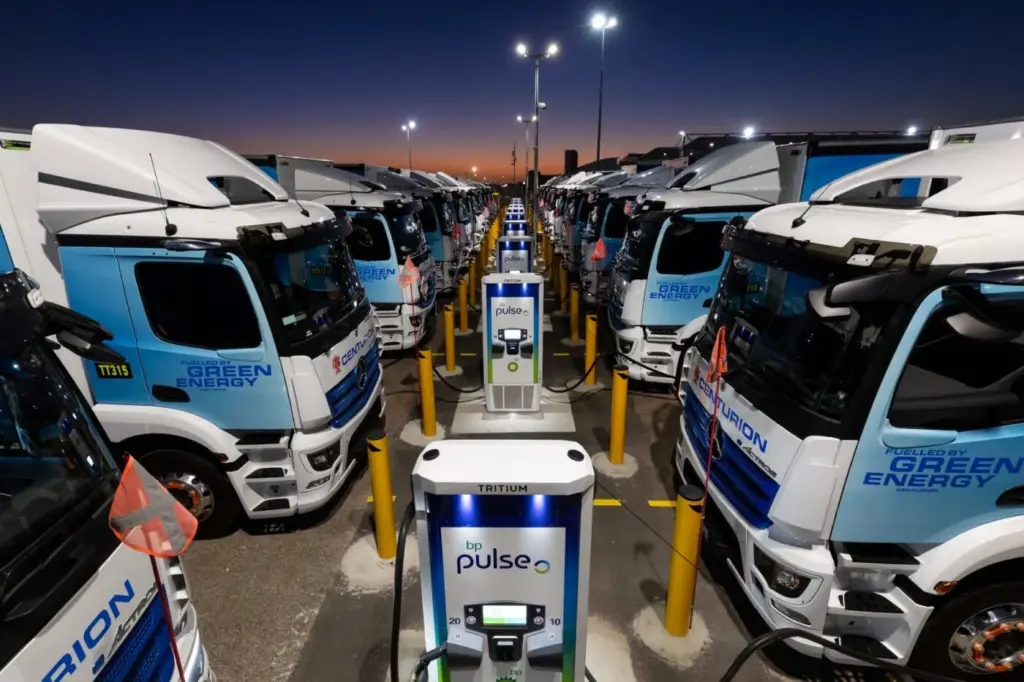
Article contents
The package is intended to improve heavy-vehicle access and productivity, with zero-emission trucks included in the reforms. Industry reporting says the measures include improving the availability of charging infrastructure, addressing weight restrictions and reducing or removing some operating curfews for quieter zero-emission trucks.
Electric trucks face more than a charging problem
The Productivity Commission’s heavy-vehicle reform report, released on 14 August, identifies road access as one of the main barriers to heavier zero-emission trucks.
Battery-electric trucks can be heavier than diesel equivalents because of the battery pack. If road or axle-mass rules do not account for that additional weight, operators can lose payload, reducing the commercial value of the vehicle even when its range and charging performance are suitable for the route.
The Commission recommends reforms that make it easier for heavy zero-emission vehicles to access the road network and specifically identifies the longer-term need to address the payload penalty.
Charging infrastructure also depends on planning and road access
The report says planning rules need to recognise heavy-vehicle charging as an emerging land use and calls for better information to guide where charging should be developed. It also highlights the role of heavy-vehicle rest areas in future charging provision.
That matters because truck charging sites need more than a large electrical connection. They also need vehicle access, suitable circulation space and locations that fit existing freight routes and driver-rest requirements.
Quieter trucks could make overnight operation easier
The Productivity Commission also supports reviewing time-based curfews where they are primarily intended to control noise. Battery-electric trucks are significantly quieter at low speeds and during loading-area movements than conventional diesel vehicles.
If curfews are relaxed for suitable zero-emission vehicles, overnight depot charging becomes more useful because fleets can charge during lower-demand periods without necessarily losing the ability to operate outside daytime delivery windows.
Electric trucks still account for less than 1% of Australian heavy-vehicle sales, but the reform package shows that charging infrastructure, road access and operating rules increasingly need to be considered together.
Related articles
£70m Rapid Charging Fund pilot awarded no funding after all applicants withdrew
A £70 million government pilot intended to unlock electricity-network upgrades at motorway service areas ended without allocating any funding after all applicants withdrew, according…

UK lays new electricity-network growth guidance for Ofgem
The UK government has laid draft statutory guidance to the Gas and Electricity Markets Authority, Ofgem's governing body, intended to give greater weight to…

Zerova brings 1.44 MW MCS dispenser to Europe
Zerova has introduced its megawatt-class MCS fleet satellite dispenser to the European market at IAA Transportation 2026 in Hanover, specifying up to 1,440 kW…