 EVCP Info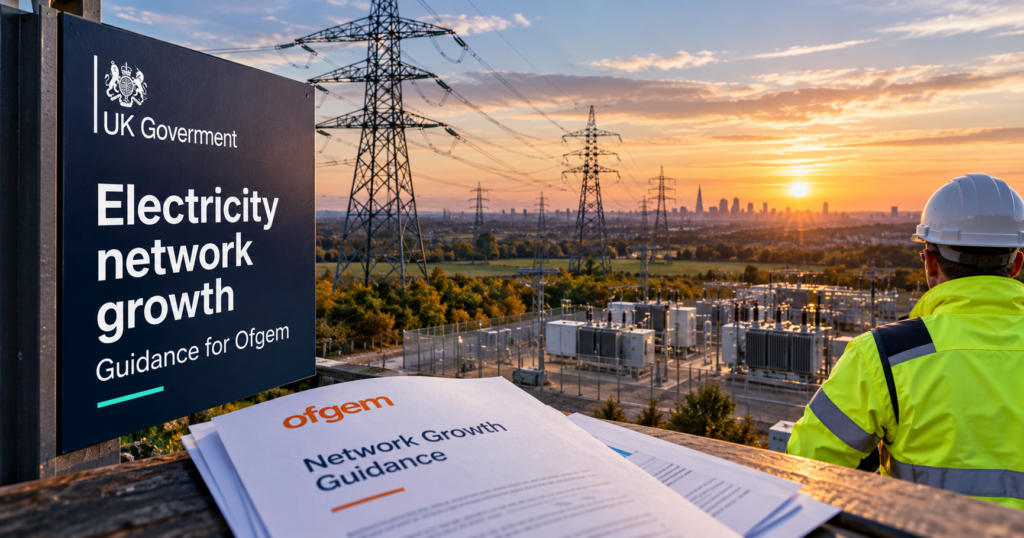
Article contents
The guidance was published on 14 September 2026 and is due to come into effect on 17 November after a 40-day parliamentary consideration period. It applies to electricity networks in England, Scotland and Wales.
The guidance is issued under the Electricity Act 1989
The Department for Energy Security and Net Zero is using section 3B of the Electricity Act 1989 to issue Social and Environmental Guidance to GEMA.
The stated purpose is to ensure that Ofgem can support electricity networks to enable growth in a way consistent with its existing objectives, duties and functions. The guidance does not replace those duties or give growth automatic priority over consumer protection and other statutory considerations.
DNOs are explicitly included in implementation
Following consultation, DESNZ says the final draft more clearly includes Distribution Network Operators within the scope of actions for implementing the guidance. Independent Distribution Network Operators are encouraged to align voluntarily.
This matters for EV infrastructure because many depots, charging hubs and fleet sites connect to distribution networks rather than directly to transmission. However, inclusion of DNOs in the policy framework does not create a new right for an individual charging project to receive an earlier or larger connection.
The focus includes network procurement and supply chains
The guidance asks Ofgem to consider how electricity-network investment can support domestic manufacturing, supply-chain resilience, workforce capability and wider economic growth.
It also discusses social-value weighting in network procurement. Government supports voluntary alignment with a minimum 10% social-value weighting and asks Ofgem and network owners to consider working towards 20% as a longer-term ambition, while maintaining proportionality and compliance with procurement and international obligations.
It does not directly reform the connections queue
The document is relevant to the environment in which electricity networks are planned, funded and procured, but it is not an EV charging connections policy.
It does not itself guarantee faster connection dates, reserve capacity for charging hubs or establish a new queue-management process. Any project-level effect will depend on how Ofgem and network owners implement the guidance through regulatory decisions, investment plans and other existing or future connection reforms.
High-power charging depends on wider network investment
Large public charging hubs, electric-HGV facilities and fleet depots can require multi-megawatt connections. Their delivery can therefore depend on reinforcement, substation capacity and the timing of network investment beyond the charging site itself.
A regulatory environment that supports timely network build-out can indirectly improve the conditions for such projects. That is a structural implication of the guidance rather than a confirmed project-level outcome.
The draft is expected to take effect on 17 November
DESNZ says the guidance will come into effect on 17 November 2026 after the parliamentary consideration period. The government also expects Ofgem to set out annually how the guidance has been enacted.
The consultation response notes that future work on an Ofgem-specific Strategic Policy Statement is expected to build on and eventually supersede this guidance. The current document should therefore be treated as draft statutory guidance with a stated commencement date, not as the final long-term regulatory framework.
Related articles
Plug-in solar becomes legal in Great Britain
Compliant plug-in solar devices can now legally be bought and used across Great Britain after the new regulatory framework came into force on 27…
New GB wholesale-market rules tighten eligibility for aggregated flexibility
New Balancing and Settlement Code rules took effect on 24 August, tightening which generation assets can participate through the wholesale-flexibility arrangements created by P415.
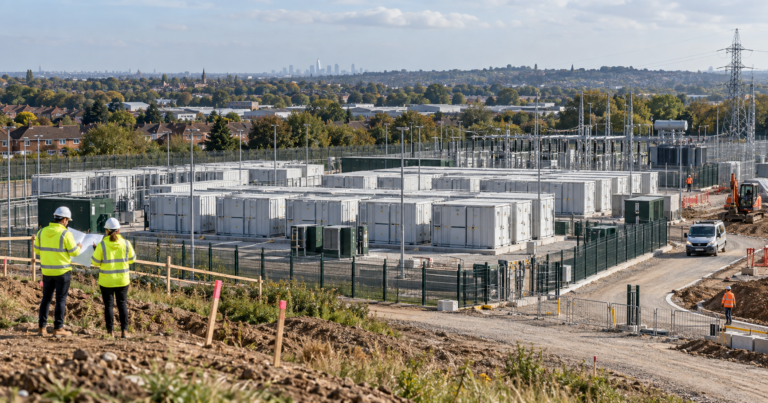
240 MW Chessington battery project clears EIA screening stage
Kingston Council has determined that a proposed 240 MW battery energy storage project at Chessington does not require a full Environmental Impact Assessment at…