 EVCP Info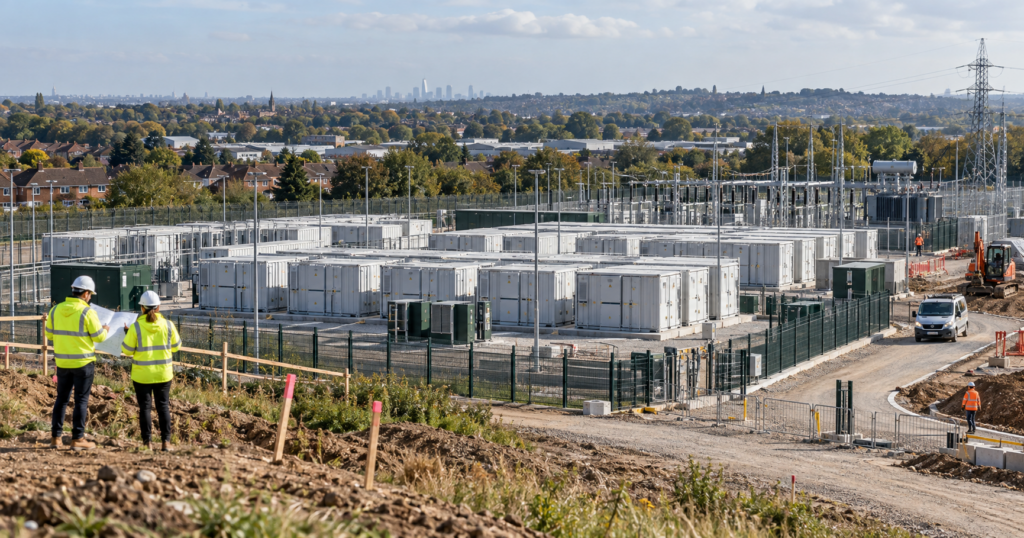
Article contents
The screening opinion was signed on 10 September and issued on 11 September. Local reporting based on the council’s planning record says the proposed Eku Energy project is a 240 MW / 960 MWh BESS on land off the A243 Leatherhead Road.
The decision is not planning permission
An EIA screening opinion answers a narrow procedural question: whether the likely environmental effects require a formal Environmental Statement before the planning application is considered. It does not approve construction, settle Green Belt issues or decide fire, traffic, landscape or other planning matters.
Kingston’s screening response also says a future proposal must provide robust information on protected species, specifically bats and great crested newts, because activity has been recorded around the site. A full planning application had not yet been determined when the screening decision was reported.
Grid-scale batteries sit far above charging-hub storage
The project is adjacent to EV charging rather than a charging development itself, but its scale is useful context. A 240 MW grid-connected battery operates in a different class from the behind-the-meter storage increasingly used at depots and charging hubs, where batteries may buffer constrained connections or manage local peaks.
The underlying functions can nevertheless overlap. Grid-scale BESS can provide balancing, reserve and energy shifting across the electricity system, while site-level batteries can shift energy in time, limit connection peaks and support short periods of charging above the site’s steady grid import.
The planning stage matters when interpreting storage headlines
Battery projects often appear in industry coverage at several distinct stages: developer proposal, EIA screening, full planning application, consent, grid-connection agreement, financial close and construction. Those stages should not be conflated.
Chessington has cleared only the EIA screening question. The project remains a useful indicator of the scale of storage entering the development pipeline, but it is not yet evidence of 240 MW of new operational flexibility on the grid.
Related articles

UK lays new electricity-network growth guidance for Ofgem
The UK government has laid draft statutory guidance to the Gas and Electricity Markets Authority, Ofgem's governing body, intended to give greater weight to…
Plug-in solar becomes legal in Great Britain
Compliant plug-in solar devices can now legally be bought and used across Great Britain after the new regulatory framework came into force on 27…

New GB wholesale-market rules tighten eligibility for aggregated flexibility
New Balancing and Settlement Code rules took effect on 24 August, tightening which generation assets can participate through the wholesale-flexibility arrangements created by P415.