 EVCP Info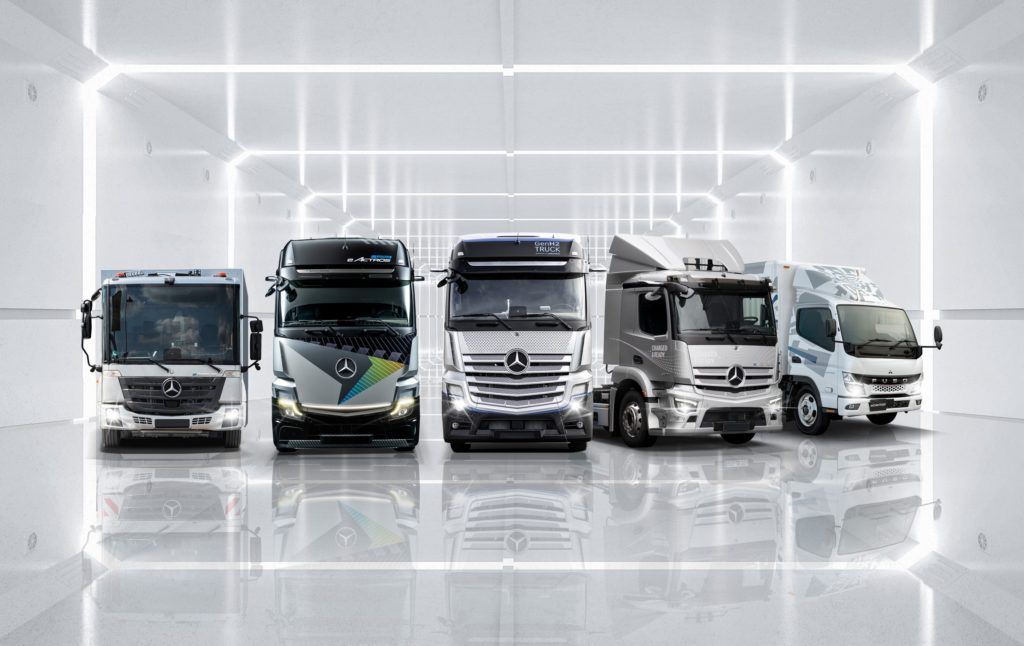
Article contents
ICCT finds that public charging provision for the current light-duty fleet is now broadly ahead of the Alternative Fuels Infrastructure Regulation’s fleet-based benchmark. All EU Member States except Malta exceeded the fleet-based target used in the assessment. On the TEN-T road network, 92% was classed as covered by DC charging rated at 150 kW or above.
Passenger charging has moved into a different phase
For the TEN-T assessment, ICCT treats a section of road as covered where a qualifying charger is located within 1 km of the network at intervals of 60 km or less. On that basis, high-power passenger-vehicle coverage is already extensive across the EU.
That does not mean every corridor or charging experience is equivalent. The physical network remains geographically concentrated: 55% of EU public chargers are located in the Netherlands, Germany and France. Charger count also says little on its own about power sharing, site grid capacity, reliability, queuing or utilisation.
The direction of travel is nevertheless clear. For passenger vehicles, the infrastructure question is increasingly moving beyond basic availability towards the quality and capability of the network: how much power is actually available, whether sites are reliable, how well capacity matches demand and what drivers pay to use it.
Dedicated truck charging covers only 16% of TEN-T
Heavy-duty charging remains at a much earlier stage. ICCT identifies approximately 2,450 public chargers dedicated to heavy-duty vehicles and estimates that these provide coverage across only 16% of the TEN-T road network.
The comparison with the 92% figure for 150 kW-and-above passenger charging is significant. Truck charging requires more than simply installing additional connectors. Sites need vehicle access and manoeuvring space, charging bays designed for large vehicles, much higher energy delivery per stop and, in many cases, grid connections capable of supporting multiple high-power CCS or future Megawatt Charging System sessions.
The result is effectively two infrastructure transitions taking place at different speeds. Passenger charging has reached broad network coverage in many markets, while the heavy-duty sector is still building the basic corridor network needed for large-scale operation.
Public charging prices still matter
ICCT reports average EU ad-hoc prices in June 2026 of about €0.50/kWh for AC charging and €0.62/kWh for DC charging, including VAT. It also estimates that public charging is roughly twice as expensive as private charging.
The report finds that passenger BEVs can generally remain economically competitive with comparable combustion vehicles even when relying on public charging. The position for long-haul battery-electric trucks is less mature: where operators depend heavily on public charging, operating-cost parity with diesel has not yet been reached in every use case.
The total charger count is no longer enough
The 1.16 million figure is a useful measure of scale, but it is not a complete measure of infrastructure readiness. For passenger vehicles, the next questions are increasingly about power, reliability, pricing, utilisation and geographic gaps. For heavy-duty vehicles, much of the network still has to be built.
The current passenger-car fleet can be well served by public infrastructure while the same network remains unsuitable for future high-utilisation truck operations. Point count, power capability, vehicle access and corridor coverage need to be considered separately.
Related articles
UK rapid-charging tariff spread reaches roughly 39p-93p/kWh
UK rapid and ultra-rapid public charging prices now span roughly 39p/kWh to 93p/kWh across selected tariffs in Chargenet's 11 September comparison, illustrating how difficult…
More than 90% of UK councils have public charging, but on-street gap remains
More than 90% of UK councils have at least one public EV charger within their area, but only 39% report on-street charging provision, according…
EU public charging capacity reaches 41.6 GW as power grows faster than station count
Public EV charging capacity across the European Union reached 41.6 GW in June 2026, up 29% year on year, according to the latest quarterly…