 EVCP Info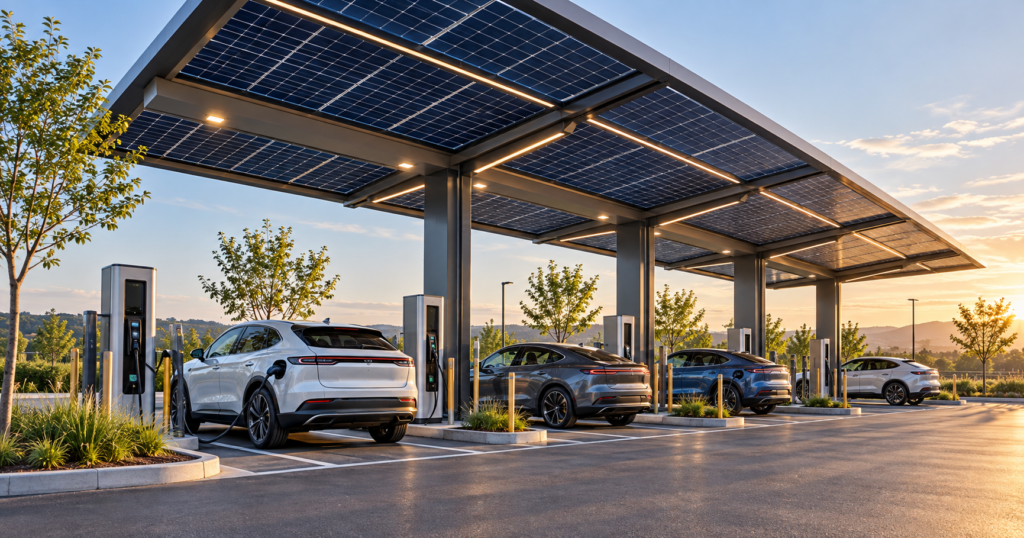
Article contents
Charnwood Borough Council’s public announcement describes a solar canopy, battery storage system and charging hub with 12 charging stations. The planning record provides more technical detail, describing 39 kW of solar PV, a 27 kWh battery energy storage system and six 11 kW EV charging points within 16 existing parking spaces.
The project combines PV, storage and EV charging
The architecture is more useful than the headline charger count. Solar generation, battery storage and EV charging are being installed as parts of the same site energy system rather than as independent assets.
In principle, that type of arrangement can allow locally generated electricity to be stored and used later, reduce grid imports at selected times and help manage short-duration site peaks. The actual behaviour depends on the energy-management controls, battery power rating, operating strategy and grid connection, none of which are stated in the public information reviewed.
Public descriptions use different charger counts
There is one specification point that remains unclear. The council announcement says the hub will provide 12 charging stations, while the planning application describes six 11 kW EVCPs. The sources reviewed do not explain whether those six units provide 12 charging outlets or whether the difference reflects a change in terminology or design.
A small project with a useful site-energy model
The project is modest in scale, but it is a useful example of how public charging sites can be designed around more than the EVSE itself. Solar generation and battery storage can become part of the site’s electrical architecture, particularly where operators want to make better use of local generation or manage the relationship between charging demand and the grid connection.
The missing specifications remain important. The public sources do not state the battery’s kW charge/discharge capability, the site’s grid-connection capacity, the charging-management strategy or whether all EV outputs can operate at their nameplate rating simultaneously. Those details would determine how much practical benefit the integrated system can deliver.
Related articles
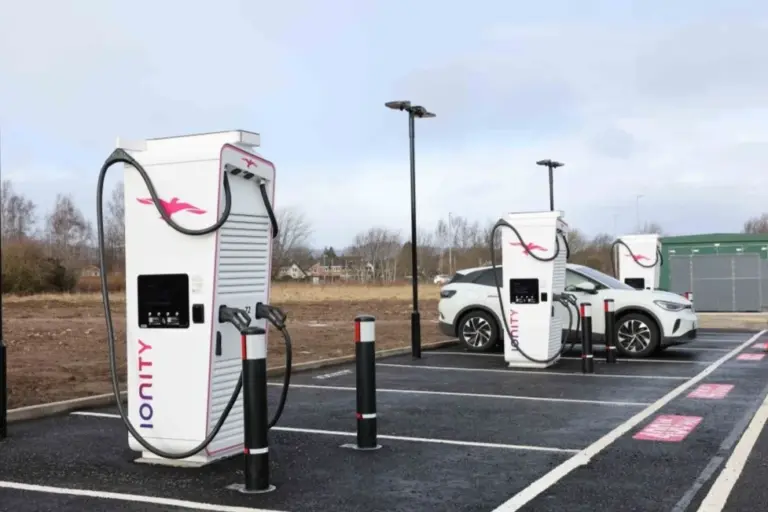
IONITY signs Irish power agreement covering 48 ultra-fast chargepoints
IONITY has signed a corporate power purchase agreement with Irish energy supplier Pinergy covering its network of 48 ultra-fast charging points across seven locations…
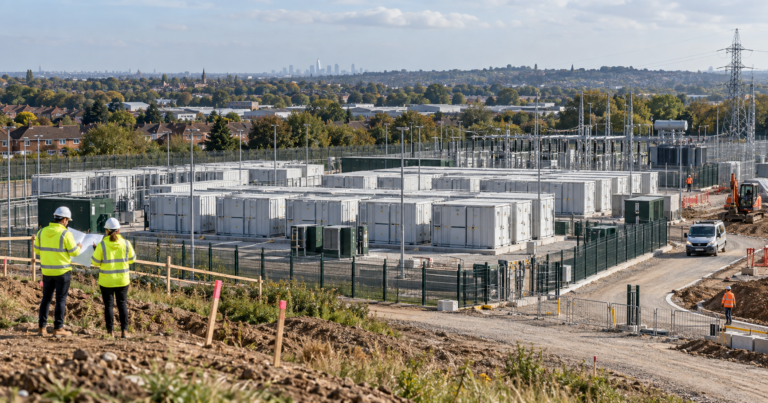
240 MW Chessington battery project clears EIA screening stage
Kingston Council has determined that a proposed 240 MW battery energy storage project at Chessington does not require a full Environmental Impact Assessment at…
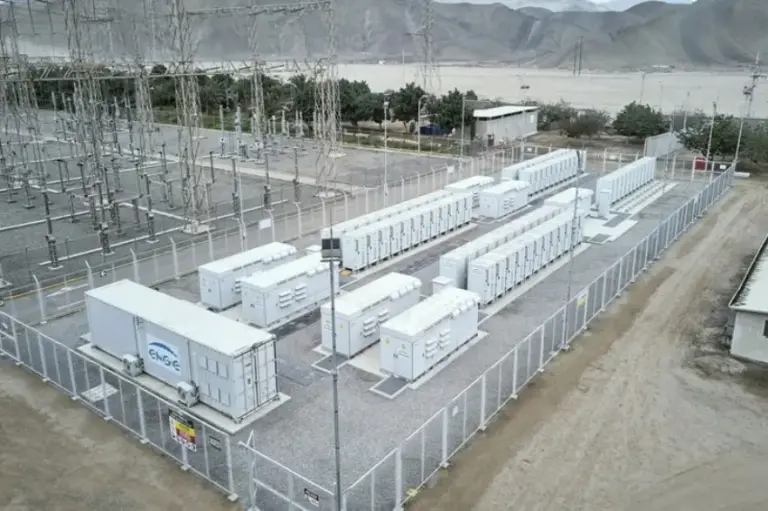
European battery-storage installations forecast to rise 78% to 57 GWh in 2026
European battery-storage installations are forecast to reach approximately 57 GWh in 2026, up from 32 GWh in 2025, according to EUPD Research's latest Electrical…