 EVCP Info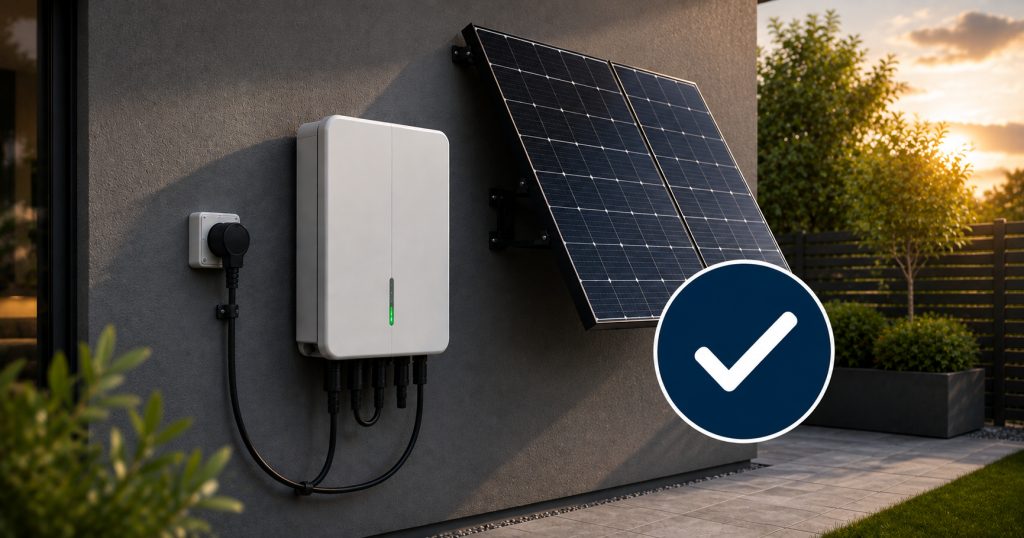
Article contents
The government says each compliant kit can provide up to 800 W of power. The change creates a new route for small plug-in generation, but it does not mean every solar kit sold with a standard plug is automatically compliant.
A new route for plug-in generation
DESNZ says the legal changes follow amendments to the Plugs and Sockets etc. (Safety) Regulations 1994 and the Electricity Safety, Quality and Continuity Regulations 2002. Products still need to meet the government’s interim product specification and the relevant grid-connection requirements.
Current guidance also makes an important distinction between plug-in solar and storage. The first framework is for solar generation rather than plug-in battery systems.
Why EV charger load management needs attention
Plug-in solar is relevant to EV charging because many home chargers use a current transformer or another site measurement to decide how much power is available for charging.
If generation is connected downstream of the measurement point, the charger may see a different net load from the actual household demand. The effect depends on the electrical topology, CT location and whether the charger is controlling against import, net flow or another site-power value.
That does not make plug-in solar incompatible with EV charging, but installers and charger manufacturers need to understand how their load-management logic behaves when small-scale generation is added to the same installation.
Compliance remains product-specific
The legal route should not be read as approval for any existing plug-in solar kit. Buyers still need to check that the product meets the applicable specification and grid-connection requirements.
DNO notification also remains part of the grid-connection process. The practical registration route is expected to evolve as the market develops.
Related articles
UK lays new electricity-network growth guidance for Ofgem
The UK government has laid draft statutory guidance to the Gas and Electricity Markets Authority, Ofgem's governing body, intended to give greater weight to…
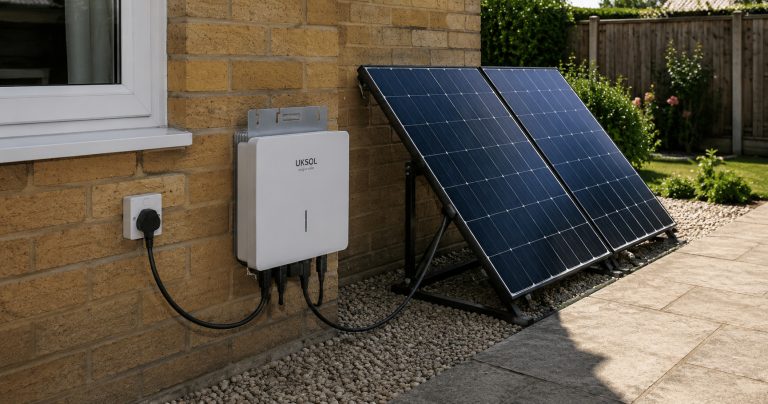
Ofgem approves G98 plug-in solar change pending linked legislation
Ofgem has approved a change to Engineering Recommendation G98 intended to facilitate compliant plug-in solar PV, but the amendment will not take effect until…
240 MW Chessington battery project clears EIA screening stage
Kingston Council has determined that a proposed 240 MW battery energy storage project at Chessington does not require a full Environmental Impact Assessment at…