 EVCP Info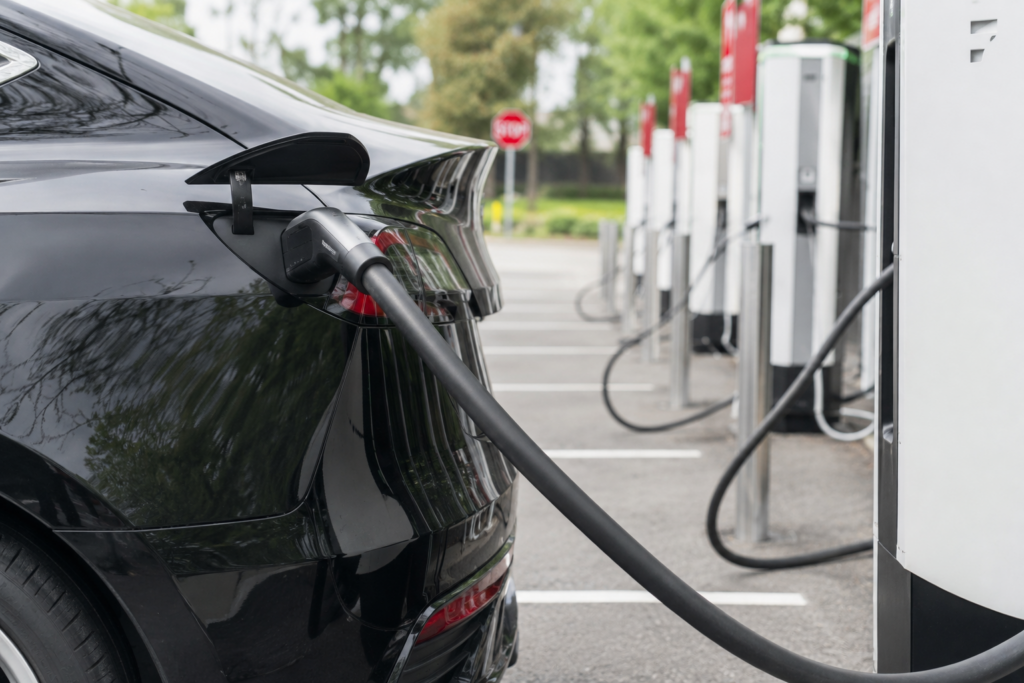
Article contents
The network comprises more than 180,000 Level 2 outlets, over 73,000 DC fast-charging outlets and a smaller number of Level 1 connections. The 200,000-outlet milestone was reached in March 2026, meaning the network added roughly 50,000 outlets in fewer than three months – a pace of expansion that significantly exceeds anything seen in earlier years.
Tesla continues to lead in DC fast charging, with approximately 38,000 Supercharger outlets across its US network. ChargePoint holds the largest share of Level 2 infrastructure, with over 76,000 plugs. Newer entrants are also building meaningful scale: Ionna has reached 120 locations with 1,130 DC charge points, and Rivian’s Adventure Network covers 149 stations with just over 1,000 DC chargers.
The fast-charging segment has been the most dynamic part of the network in 2026. In Q1 alone, 3,387 new DC fast-charging outlets were deployed – on pace with Q1 2025 – and data from the industry platform Paren shows that 55% of non-Tesla deployments in Q1 were high-power units rated at 250kW or above. The shift toward larger, multi-stall sites is also visible in average outlet counts per location, which have risen to more than 4.7, up from 4.1 a year earlier.
Distribution remains uneven. California alone accounts for a disproportionate share of the national total. The federal NEVI programme, which committed $5 billion to public charging, has moved more slowly than originally anticipated, though it continues to fund installations in underserved corridors. Despite the headline milestone, access in rural areas and lower-income communities remains a persistent challenge.
In 2026 alone, operators have added more than 5,000 DC fast-charging outlets and nearly 13,000 Level 2 connections. The trajectory points upward, but closing the geographic and socioeconomic gaps in coverage will require targeted policy attention alongside the market-led expansion that has driven most of the growth to date.
Related articles
UK rapid-charging tariff spread reaches roughly 39p-93p/kWh
UK rapid and ultra-rapid public charging prices now span roughly 39p/kWh to 93p/kWh across selected tariffs in Chargenet's 11 September comparison, illustrating how difficult…
More than 90% of UK councils have public charging, but on-street gap remains
More than 90% of UK councils have at least one public EV charger within their area, but only 39% report on-street charging provision, according…
European battery-storage installations forecast to rise 78% to 57 GWh in 2026
European battery-storage installations are forecast to reach approximately 57 GWh in 2026, up from 32 GWh in 2025, according to EUPD Research's latest Electrical…