 EVCP Info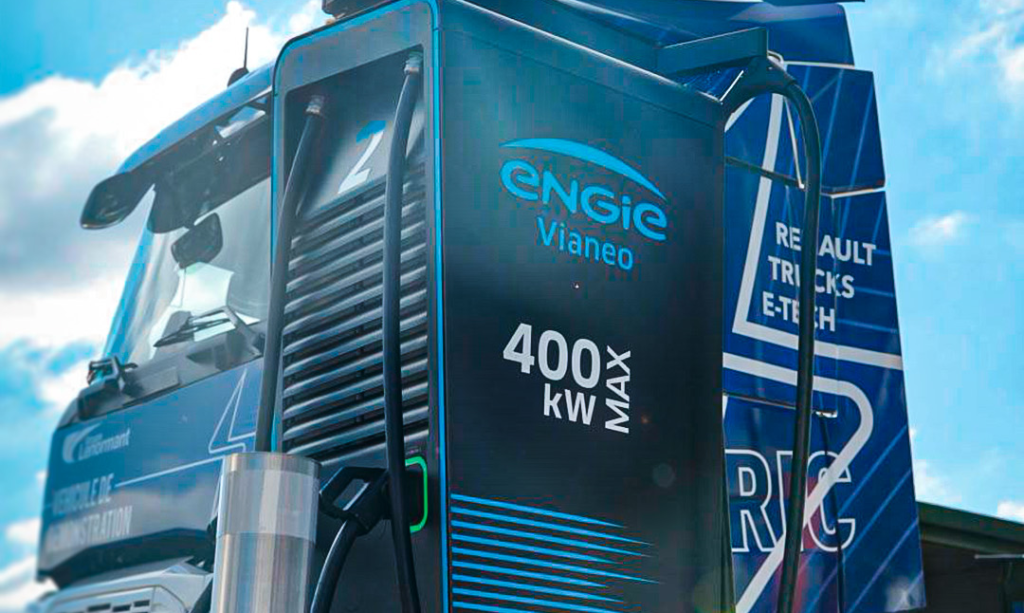
Article contents
The sites are planned for the A7, A2 and A9 freight corridors and are due to enter service between January and July 2027.
Mixed CCS and MCS configurations
| Site | Planned charging |
|---|---|
| Homberg (A7) | 3 x 400 kW CCS + 1 x 1,000 kW MCS |
| Gramschatzer Wald (A7) | 4 x 400 kW CCS + 1 x 1,000 kW MCS |
| Lippetal/Hamm (A2) | 6 x 400 kW CCS + 2 x 1,000 kW MCS |
| Pfaffenhofen/Schweitenkirchen (A9) | 6 x 400 kW CCS |
The approach allows the sites to serve current CCS-equipped electric trucks while adding dedicated MCS capacity for vehicles able to accept megawatt charging.
The 1 MW rating applies only to the MCS outputs. The remaining charging points are specified at 400 kW.
Motorway service areas provide more than electrical capacity
The locations sit on established freight routes and existing HGV service areas, where charging can be combined with parking, driver facilities and legally required rest periods.
For heavy-duty charging, that site layout matters alongside charger power. Vehicle circulation, trailer access, bay geometry and the ability to use multiple chargers simultaneously can determine whether the installation works in day-to-day freight operation.
Part of a larger German rollout
ENGIE Vianeo says it is currently developing around 50 commercial-vehicle charging locations in Germany.
The company is also targeting 25,000 public charging points across Europe by 2030, including 1,000 dedicated to heavy-duty electric commercial vehicles.
The four new sites provide a practical example of the transition period in which CCS and MCS are likely to operate side by side rather than one immediately replacing the other.
Related articles
BYD reaches 10,000 Flash Charging stations as 1.5 MW network expands
BYD has opened its 10,000th Flash Charging station in China, doubling the size of the network in less than five months.
BTC POWER and Summit outline 17-site US charging pipeline
BTC POWER and Summit Charging have outlined a 17-site US charging pipeline covering 107 chargers and 135 charging ports, including projects that the companies…
Zerova brings 1.44 MW MCS dispenser to Europe
Zerova has introduced its megawatt-class MCS fleet satellite dispenser to the European market at IAA Transportation 2026 in Hanover, specifying up to 1,440 kW…