 EVCP Info
Article contents
The guidance brings together 71 data points and shows whether each is mandatory, optional, conditional or not required for each battery category.
The requirement applies to EV batteries, light-means-of-transport batteries and industrial batteries above 2 kWh that are placed on the EU market or put into service.
The guidance does not create new legal requirements
The Commission says the document is intended to help manufacturers, importers and other economic operators prepare their data systems and reporting processes.
It does not create additional legal requirements and should not be treated as an authoritative legal interpretation of the Batteries Regulation.
The passport adds a new battery data layer
Depending on the battery category, passport information can include battery identification, technical characteristics, performance and durability data, manufacturer information and details supporting repair, reuse and recycling.
For EV charging and energy businesses, the relevance is mainly downstream. Battery capacity, durability and lifecycle information could become useful when assessing vehicle charging behaviour, residual value, second-life battery use and bidirectional-energy applications.
Access rights are still being finalised
The practical question is not simply what information exists, but who is allowed to read it.
The Commission expects a separate implementing act on battery passport access rights in the fourth quarter of 2026. Until that is finalised, it is too early to assume that charging platforms, fleet software or V2G operators will automatically have access to all battery data contained in the passport.
Battery Passport data is not the same as live vehicle data
The passport should also not be confused with the live information exchanged between a vehicle, charger and battery-management system during charging.
A Battery Passport is primarily a regulated product-information and traceability system. ISO 15118 and vehicle-side systems deal with live charging communication and operational data.
There may eventually be useful overlap between the two, but one does not replace the other.
Related articles

OCA wraps up Seoul OCPP Plugfest Asia 2026
The Open Charge Alliance has published a wrap-up of its OCPP Plugfest & Conference Asia 2026, held in Seoul on 25 and 26 August.
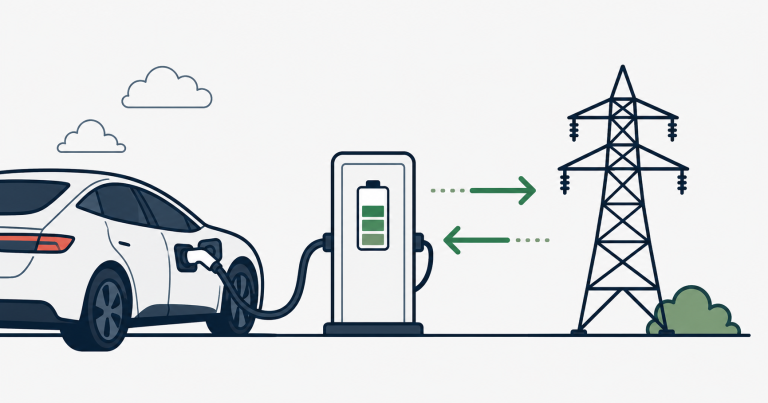
EU V2G grid-code consultation closes with charger-to-grid interface unresolved
The European Commission's consultation on revising the Network Code on Requirements for Grid Connection of Generators closes today, 25 August, with the draft extending…

UK lays new electricity-network growth guidance for Ofgem
The UK government has laid draft statutory guidance to the Gas and Electricity Markets Authority, Ofgem's governing body, intended to give greater weight to…