 EVCP Info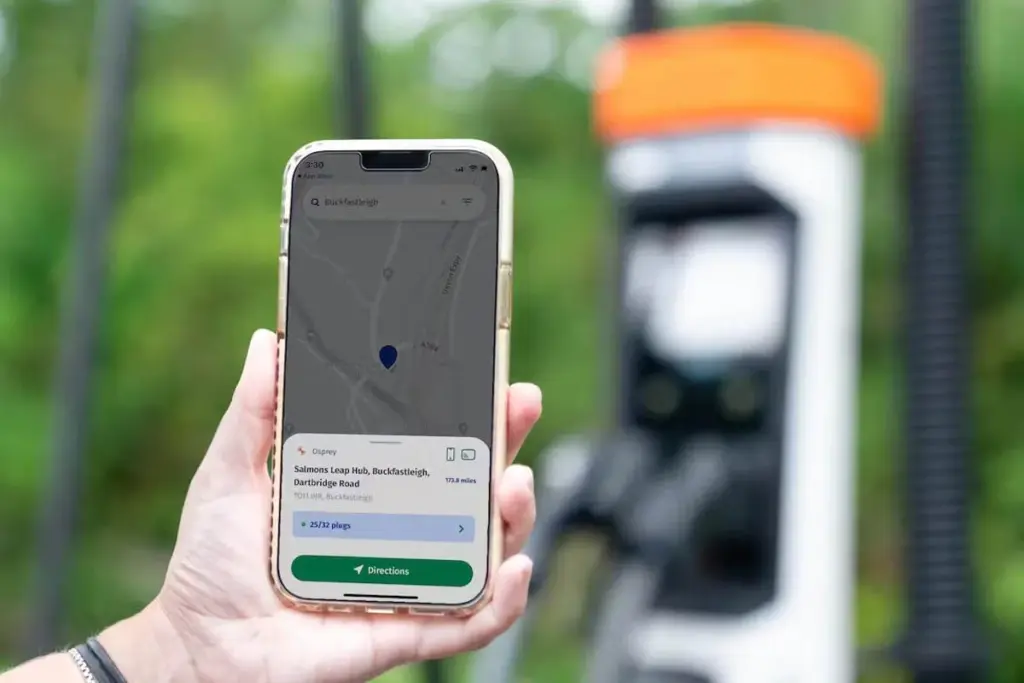
Article contents
Once a compatible vehicle has been enrolled, the driver can connect at a supported charger and the session starts automatically, with payment taken from the card stored in the Osprey app. Osprey says the launch makes it the largest UK charging network currently offering Autocharge.
Two charging sessions are required before Autocharge is enabled
Osprey’s setup process first requires the driver to start charging through the Osprey app at two separate Osprey charge points. The vehicle shares a digital identifier when it connects; Osprey’s support documentation identifies this as a MAC address. After two qualifying sessions, compatible vehicles can be linked to the driver’s account for automatic authentication.
The feature currently works through CCS charging only, and not every CCS vehicle is compatible. Some vehicles either do not support the required Autocharge behaviour or change the identifier they expose between sessions, preventing Osprey from recognising the vehicle reliably.
Autocharge is not ISO 15118 Plug & Charge
The user experience can look similar to Plug & Charge because both can start a session without a card tap or app interaction, but the authentication mechanisms are different.
Osprey Go currently recognises a vehicle using the identifier exposed during the CCS connection and links that identifier to an Osprey account. ISO 15118 Plug & Charge instead uses a certificate-based framework in which the vehicle presents a charging contract certificate that can be validated through the Plug & Charge ecosystem and its public-key infrastructure.
Osprey explicitly describes Plug & Charge as a separate technology and says it intends to investigate support in future. Osprey Go therefore should not be described as an ISO 15118 Plug & Charge implementation.
Dynamic pricing could be the more significant commercial change
Alongside Autocharge, Osprey is extending dynamic pricing across its network during September. Osprey Go automatically applies the best Osprey price available for the specific location and time, with lower rates available outside higher-demand periods.
Public rapid-charging tariffs have traditionally been comparatively static even though wholesale electricity prices, network charges and site demand can vary significantly through the day. A more dynamic tariff creates a mechanism for the CPO to use price to encourage charging away from expensive or heavily loaded periods.
That does not guarantee that every off-peak session directly corresponds to lower grid costs, and Osprey retains control of the customer tariff. It does, however, move public charging closer to the time-sensitive pricing already familiar in domestic smart charging.
Related articles
Plug & Charge moves into AC as chargecloud integrates Hubject PKI
chargecloud is integrating Hubject's Plug & Charge Public Key Infrastructure into its chargepoint-management platform, extending ISO 15118-2 automatic vehicle authentication to compatible AC chargepoints.
Virta opens UK and French EV charging networks to grid-flexibility revenue
Virta has launched a grid-flexibility service for charge point operators in the UK and France that can work across AC and DC charging networks…
Dundee cuts public EV charging prices as energy costs fall
Dundee City Council has reduced public EV charging prices across its Evolt-operated network, with the new tariffs taking effect from 1 September.