 EVCP Info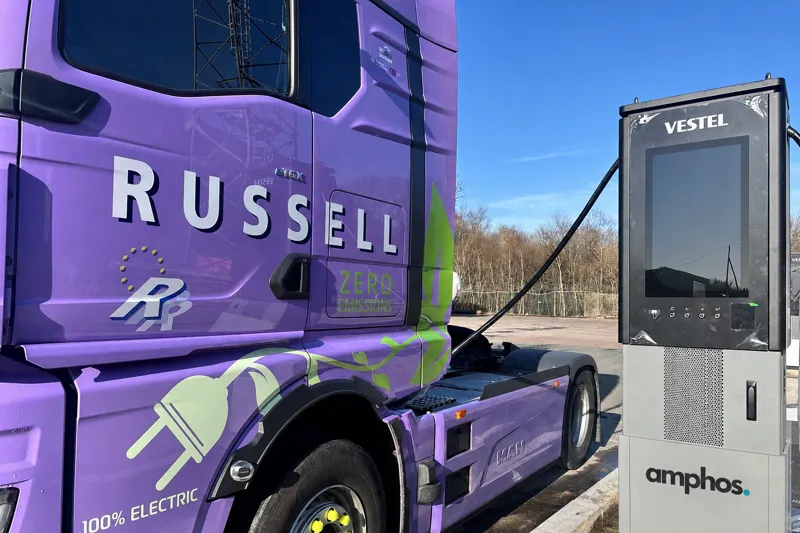
Article contents
The installation supports Russell Group’s growing electric heavy goods vehicle fleet, including three MAN eTGX 4×2 electric tractor units ordered for its subsidiary John G Russell (Transport). Those vehicles will be used on container services during the day and for blue-chip logistics contracts at night – a demanding duty cycle that requires fast, high-capacity charging to remain commercially viable. The company has said it hopes that higher charging speeds will allow its electric HGVs to be used more intensively than has traditionally been possible, addressing one of the core concerns around fleet electrification: that slow charging creates vehicle downtime that undermines the business case.
The Coatbridge hub arrives a few months after the UK’s first MCS-compatible (Megawatt Charging System) installation was deployed by Voltempo in the East Midlands. Scotland lagging behind on this specific milestone reflects a broader pattern: heavy-duty charging infrastructure has tended to concentrate in regions with high logistics activity and faster grid connection timelines. The Scottish central belt is a major freight corridor, and the Coatbridge installation signals growing confidence that the operational and grid challenges can be managed in that geography.
Megawatt charging is becoming an increasingly important category as fleet operators and hauliers confront the practical constraints of electrifying long-distance heavy transport. A standard 50kW or even 150kW charger is inadequate for a 40-tonne truck that needs to be back on the road quickly. The MCS standard, developed to deliver charging rates above 1MW, is specifically designed to address that gap. With AFIR regulation in the EU now mandating 350kW-capable charging for heavy vehicles along core TEN-T corridors, the commercial urgency of megawatt-class infrastructure is only increasing.
For Scotland’s haulage and logistics sector, the Coatbridge installation provides a proof of concept. Whether it is followed by further deployments at other depots and strategic sites across Scotland will depend on how quickly grid capacity can be secured and whether operators can build a clear commercial case for the required capital investment.
Related articles

Electreon introduces 11 kW above-ground wireless EV charger
Electreon has introduced Lite DOT, an above-ground stationary wireless charging system for electric passenger cars and light commercial vehicles, at IAA Transportation 2026 in…
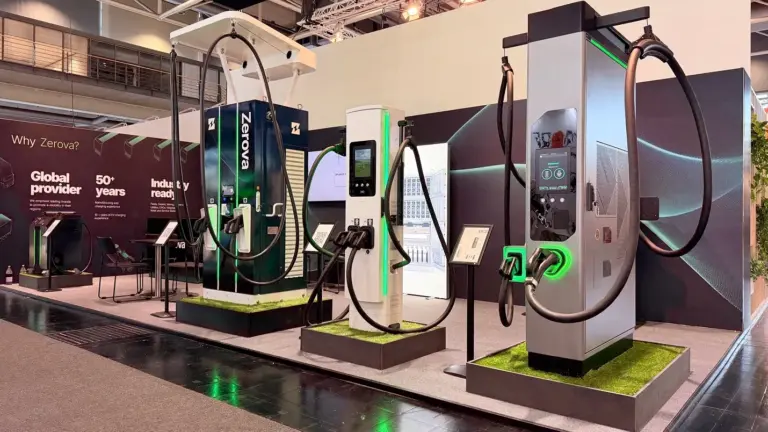
Zerova brings 1.44 MW MCS dispenser to Europe
Zerova has introduced its megawatt-class MCS fleet satellite dispenser to the European market at IAA Transportation 2026 in Hanover, specifying up to 1,440 kW…
Pod offers EVA England members home charger subscription
Pod has become EVA England's first home-charging partner, offering members a choice between a discounted charger purchase and a subscription-based home charging package.