 EVCP Info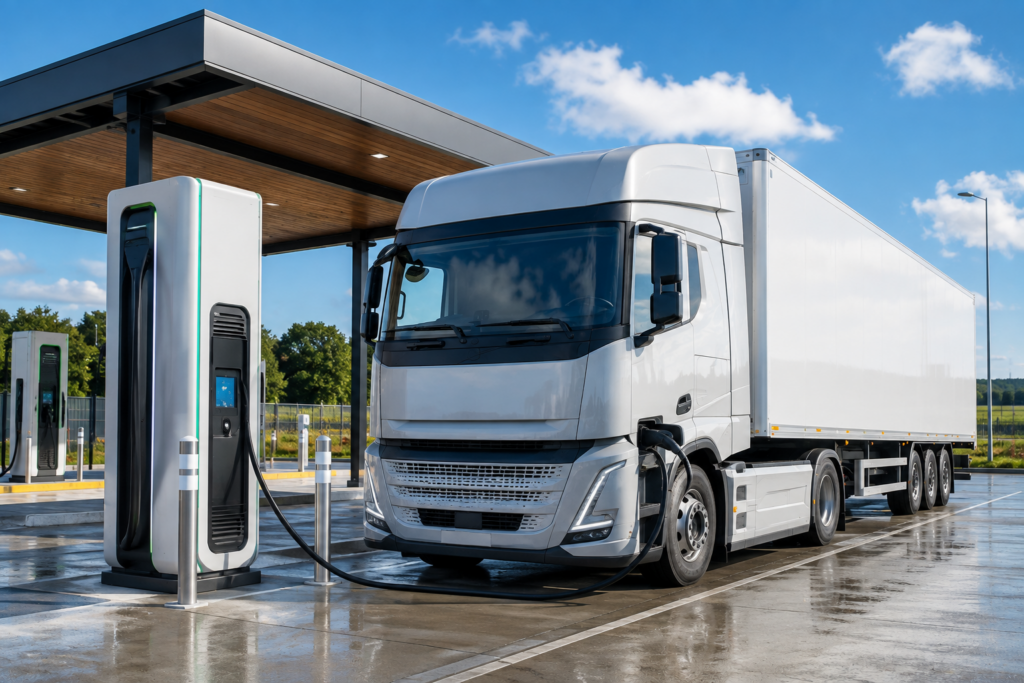
Article contents
The Surf to Turf project will install 24 public charging ports across a primary hub at the Oakland Coliseum and a second site at the Port of Oakland. The agreement runs from August 2026 to March 2029.
Most of the new connections will use MCS
The approved scope includes 20 Megawatt Charging System (MCS) ports and four CCS ports.
The Coliseum site is planned with 16 pull-through lanes, each served by an MCS port. The secondary Port of Oakland site will add four further pull-through MCS connections alongside four CCS charging stalls intended for bobtail trucks.
The Port of Oakland site uses a 1.67-acre paved area that is already used by Class 8 trucks, containerised freight handling and short-term cargo storage. The Coliseum site covers an existing 4.47-acre developed area.
Freight location shapes the charging design
The project is intended to support freight movements between the Port of Oakland and the San Joaquin Valley rather than operate as a general-purpose passenger charging hub.
Pull-through charging is particularly relevant for articulated trucks because it reduces the need to uncouple trailers or reverse into conventional parking bays. The mix of MCS and CCS also allows the sites to support vehicles with different charging capabilities.
At this scale, the design will need to account for simultaneous high-power charging, vehicle circulation, queuing and the amount of energy delivered across a working day.
The project includes utility and reliability work
The CEC agreement requires site power assessments, utility coordination, equipment procurement, commissioning and ongoing utilisation and reliability reporting.
Forum Mobility will also be required to report data including charger make and model, peak power, charging-session duration and energy delivered.
The project adds to a growing group of heavy-duty charging developments in California that are moving beyond individual demonstration chargers towards repeatable freight-corridor infrastructure.
Related articles
ENGIE Vianeo plans four German electric-truck hubs with 1 MW MCS
ENGIE Vianeo has announced four new public charging parks for electric heavy-duty vehicles at German motorway service areas, with three of the sites combining…

NewVolt starts construction of open-access electric-truck charging hub
NewVolt has started construction of its first open-access heavy-duty charging hub at Laverton North in Melbourne.

EU public charging reaches 1.16 million points as truck network lags
The European Union had about 1.16 million public charging points by June 2026, almost eight times the number available in 2020, according to the…