 EVCP Info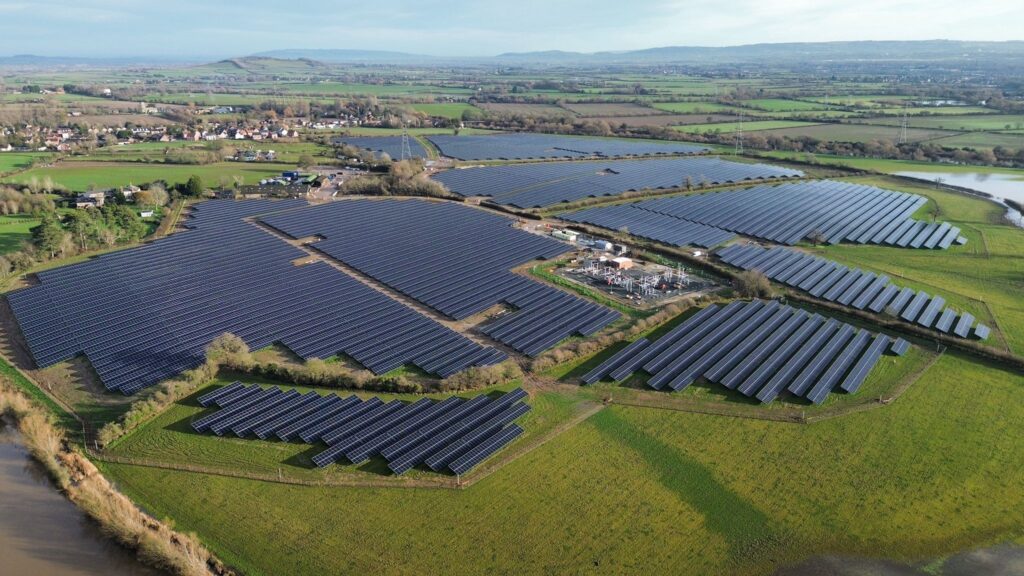
Article contents
The Indian Queens project combines 68 MW of solar generation with a 47.5 MW / 95 MWh battery energy storage system. Both assets will use a shared grid connection, with commercial operation expected in 2027.
European Energy says the shared connection allows the solar and battery assets to make more efficient use of grid infrastructure. The battery can provide flexibility when generation and network conditions do not align perfectly.
The same architecture appears in charging projects
Large charging hubs and fleet depots can face a similar problem from the opposite direction. Their highest charging demand may occur during relatively short periods, while the site connection has to be sized and paid for around those peaks.
Battery storage can be used to charge when grid capacity is available and discharge into vehicle charging when demand rises. Solar can provide an additional local energy source, although the benefit depends on the timing of generation, vehicle demand and available storage.
Storage does not remove the need for grid capacity
A battery energy storage system cannot create energy. It shifts when energy is imported or used, so the design still needs enough grid capacity and time to recharge the battery between peaks.
For charging projects, the useful questions are the site’s import limit, expected demand profile, battery power and energy capacity, charging-window length and whether generation is likely to coincide with vehicle demand.
Financing shows hybrid assets are becoming mainstream infrastructure
The significance of the £58.1 million financing is that a combined generation-and-storage asset is being funded as one long-term infrastructure project. Similar thinking is increasingly relevant where charging sites need to make better use of constrained or expensive electrical connections.
Related articles
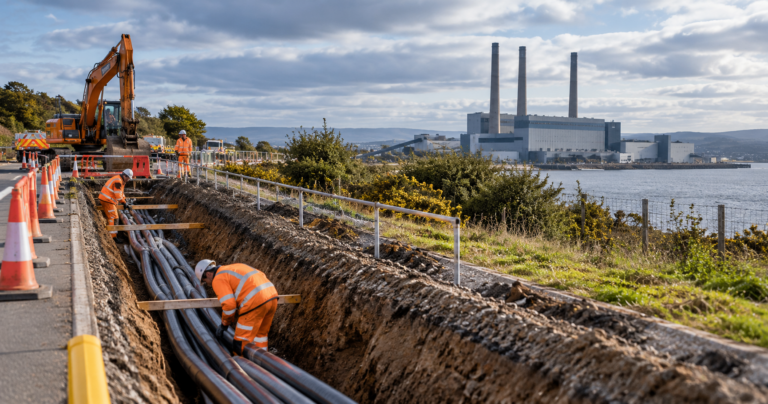
5.5 km grid connection works begin for Longannet battery project
SP Energy Networks is due to begin around 5.5 km of underground cabling works to connect a new battery energy storage site at Longannet…
SP Energy Networks expands battery-buffered fleet charging to three sites
SP Energy Networks has expanded TUAL's PowerUp battery-buffered DC charging system across three operational sites following an initial trial at Middlewich in Cheshire.
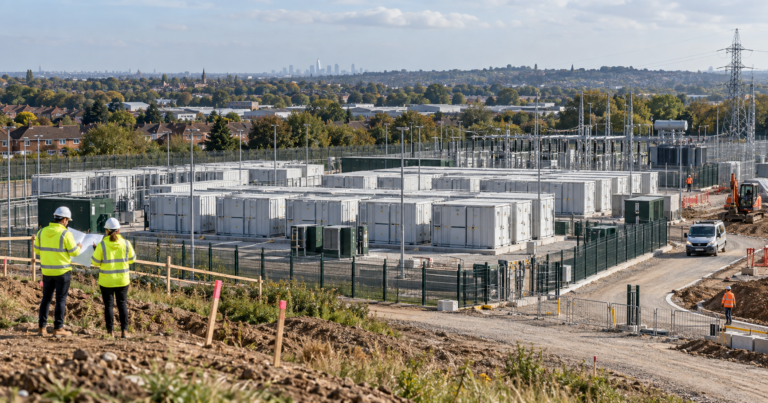
240 MW Chessington battery project clears EIA screening stage
Kingston Council has determined that a proposed 240 MW battery energy storage project at Chessington does not require a full Environmental Impact Assessment at…