 EVCP Info
Article contents
Hubject will provide point-of-interest data and charging-usage insights from a network it says covers more than 1.1 million charging points across more than 75 countries.
Observed utilisation joins conventional site-planning data
Localiser already combines population, traffic, points-of-interest and competitor data when assessing potential charging locations.
The Hubject partnership adds measured charging utilisation from comparable sites, allowing CPOs, municipalities and investors to compare theoretical demand with observed charging behaviour.
Localiser says more than 35,000 site evaluations are carried out on its platform each month.
The data can also be used after a site opens
The partnership is intended to support both new-site assessment and optimisation of operational locations.
Hubject says aggregated usage data can be used to benchmark utilisation and help operators identify where existing sites may need expansion or a different operating strategy.
The dataset is large, but it should not be treated as a complete representation of every charging network or market. Hubject’s data reflects the infrastructure and transactions visible through its connected ecosystem.
Site selection is becoming more evidence-led
Charging-network planning has traditionally relied heavily on traffic flows, demographics, nearby amenities and competitor mapping.
Adding actual utilisation gives planners another way to test whether a location that looks attractive on paper behaves similarly to comparable charging sites in practice.
Related articles

Plug & Charge moves into AC as chargecloud integrates Hubject PKI
chargecloud is integrating Hubject's Plug & Charge Public Key Infrastructure into its chargepoint-management platform, extending ISO 15118-2 automatic vehicle authentication to compatible AC chargepoints.
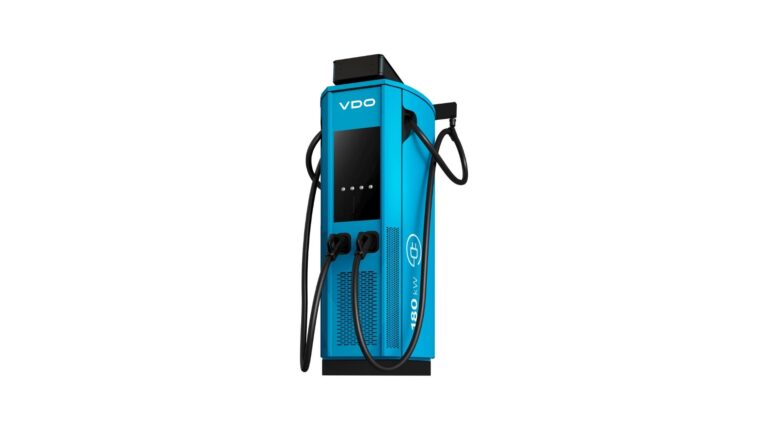
AUMOVIO enters charging hardware market with VDO fleet range
AUMOVIO has expanded its commercial-vehicle electrification portfolio into EV charging infrastructure, introducing VDO-branded charging solutions at IAA Transportation.
Paua and Zaptec combine home, workplace, depot and public fleet charging
Paua and Zaptec have formed a UK partnership intended to bring home, workplace, depot and public EV charging into one fleet-management and payment environment.