 EVCP Info
Article contents
The integration combines Zaptec charging hardware and cloud data with Paua’s public-charging payments, fleet reporting and home-charging reimbursement tools. The companies say Zaptec charging sessions can feed into Paua so businesses can calculate employee charging costs using actual session data and the driver’s electricity tariff rather than relying on manual claims or flat estimates.
The product being sold is increasingly the charging workflow
For fleets, the operational problem is no longer limited to selecting an EVSE unit. A single organisation can have drivers charging company vehicles at home, cars connected at an office, vans returning to a depot and vehicles using public networks during the working day.
Paua and Zaptec are positioning the partnership around that fragmented workflow. The proposed environment combines charger data, home reimbursement, workplace and depot visibility, public roaming access, consolidated reporting and a single monthly invoice. Paua says drivers can continue using its card and app for public charging while Zaptec hardware provides the private-site charging data.
Actual charging data can simplify home reimbursement
The home-charging element is particularly relevant for company cars and vans. Zaptec says its chargers can securely share session data using their built-in energy meters, allowing Paua to calculate reimbursement using an employee’s electricity tariff and the energy recorded for the charging session.
The companies describe the resulting process as HMRC-compliant. That is their claim about the reimbursement workflow rather than an independent tax ruling, and fleets still need appropriate records and policies for their own circumstances. The important technical point is that reimbursement can be linked to measured charging data instead of reconstructing costs from mileage alone.
Fleet charging platforms are converging around multiple locations
The partnership reflects a wider shift in fleet charging software. Public roaming, domestic reimbursement and private-site charger management developed as separate products, but fleets increasingly want them reconciled into one driver account and one finance process.
That does not mean every underlying system has become one backend. Zaptec still supplies and manages the charging hardware, while Paua provides payment, reimbursement and fleet-management functions. The value is in integrating the data and commercial workflow across those systems.
Zaptec also describes its Go 2 hardware as V2G-ready. That should not be confused with the Paua partnership itself delivering live bidirectional charging: actual V2G operation still depends on compatible vehicles, market arrangements and the necessary technical and regulatory enablement.
Related articles
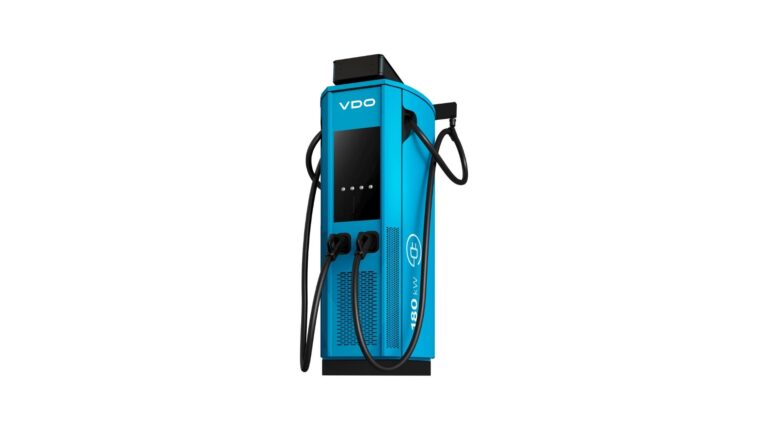
AUMOVIO enters charging hardware market with VDO fleet range
AUMOVIO has expanded its commercial-vehicle electrification portfolio into EV charging infrastructure, introducing VDO-branded charging solutions at IAA Transportation.
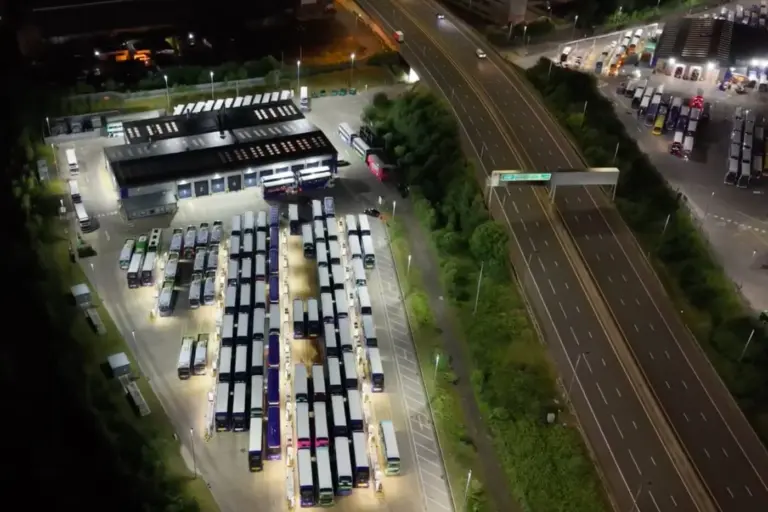
First Bus expands smart charging from 34 to 172 outlets at Glasgow depot
First Bus has expanded Optimo Energy's charging-management system from 34 to all 172 charging outlets at its Caledonia depot in Glasgow following an initial…

InstaVolt joins Shell Card network with 4,250+ UK chargers
InstaVolt has joined the Shell Card charging proposition, giving Shell Card fleet and business customers access to more than 4,250 InstaVolt chargers across over…