 EVCP Info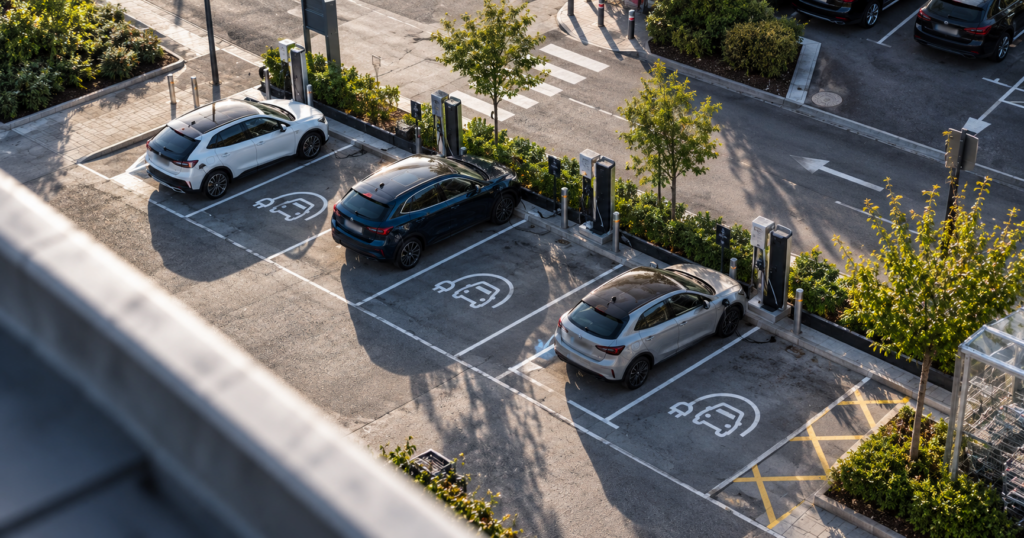
Article contents
The release is also a practical example of AFIR data requirements feeding into official statistics, because much of the dataset is built from charge point operator APIs supplied through Transport Infrastructure Ireland.
Ireland recorded 3,416 public charging points
The CSO reports 3,416 charging points, or EVSEs, and 3,662 connectors across 1,125 locations at the end of December 2025. It classifies 1,883 of those charging points as fast charging under its methodology, equal to 55% of the total.
The CSO definition is important: it includes AC charging above 22 kW and DC charging at 50 kW or above in the fast category, so the figure should not be compared directly with datasets using different power thresholds.
Most charging locations are urban
The release says 82% of public charging locations were in urban areas. Location counts, charging-point counts and connector counts are presented separately, which helps avoid the common problem of treating each site as a single charger.
The dataset also gives Ireland a clearer basis for comparing charging provision with vehicle uptake and with other European markets, provided the same definitions and reference dates are used.
AFIR APIs are becoming a statistics source
The underlying data come from Transport Infrastructure Ireland and are supplied by CPOs through APIs required under the EU Alternative Fuels Infrastructure Regulation. That makes the release significant beyond the headline charger count.
AFIR’s data-access requirements are intended to improve the availability and consistency of charging information. Here, those operational data feeds are being used directly to build national infrastructure statistics.
Coverage is not yet complete
The CSO labels the release as part of its Frontier Series and notes that some smaller operators without the required APIs were not fully captured by December 2025.
That means the dataset is both useful and a reminder that API compliance affects not only driver-facing services but also the quality of market monitoring. As more operators implement the required interfaces, future releases should provide a more complete picture.
Related articles

EVA England launches UK-wide driver survey on EV charging and policy
EVA England has launched its annual UK-wide driver survey, asking electric, hybrid, petrol and diesel drivers to share their views on charging, vehicle affordability,…
EU public charging reaches 1.16 million points as truck network lags
The European Union had about 1.16 million public charging points by June 2026, almost eight times the number available in 2020, according to the…
UK reaches 121,171 public EV chargers as rapid network grows faster
Department for Transport figures show the UK had 121,171 publicly available EV chargers, measured as EVSE, on 1 July 2026. Of these, 28,887 were…