 EVCP Info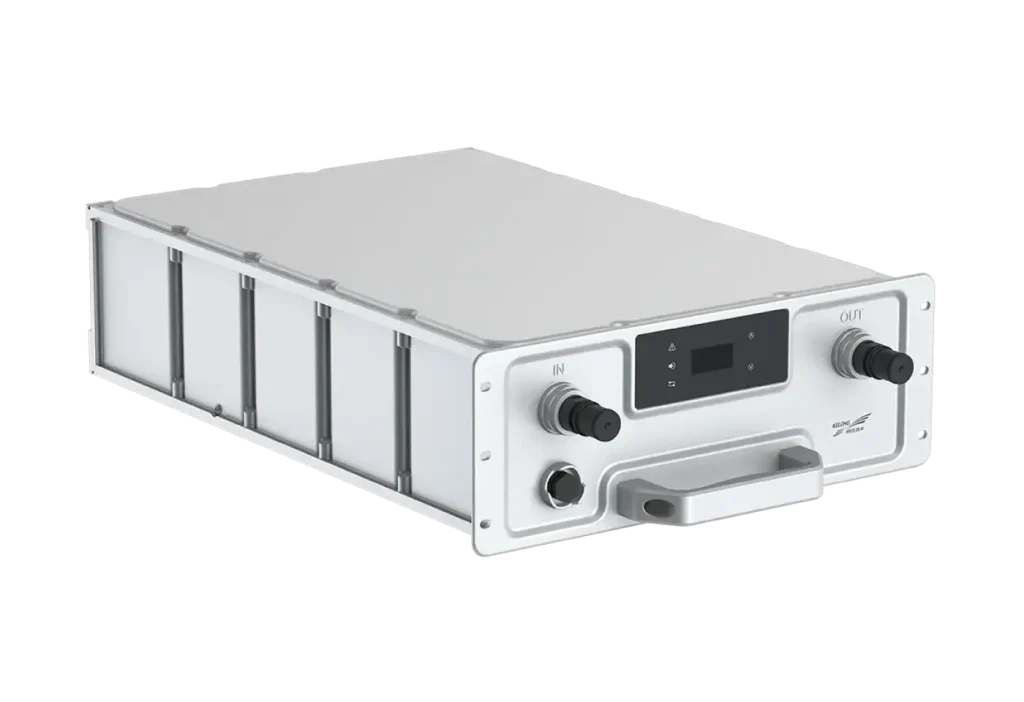
Article contents
The Chinese power-electronics manufacturer is positioning the products for ultra-fast charging, commercial fleets and future megawatt-scale infrastructure as charger architectures move toward higher module ratings and power density.
Kehua claims up to 97.5% peak efficiency for the 40 kW module
The company says the updated 40 kW module reaches 97.5% peak efficiency and 97% weighted charging efficiency. It also claims the unit is around 7.5% smaller than its previous design.
Those figures are manufacturer claims and were not independently validated in the sources reviewed. In a modular DC charger, higher conversion efficiency can reduce waste heat and cooling demand, while a smaller module can allow more power to be packaged into the same cabinet volume.
The 80 kW VPFC module uses silicon carbide
Kehua says its 80 kW VPFC module uses silicon-carbide power devices and is designed to operate from -40°C to 75°C, maintaining rated output at 55°C.
The company also states that the module meets EMC Class B and IEC 61851-23:2023 requirements. The announcement does not provide independent certification evidence or a full voltage/current operating envelope, so those points should be confirmed before the module is treated as equivalent to a finished certified charger.
Higher module ratings can simplify high-power charger architecture
DC charging cabinets are commonly built from multiple parallel power modules. Moving from smaller module blocks to 40 kW or 80 kW units can reduce module count at a given cabinet power rating, although system-level design still depends on redundancy, thermal management, service strategy and the required output-voltage range.
For megawatt-scale charging, module rating alone is not the limiting factor. Busbars, contactors, cooling, cables, connectors and the site electrical connection all have to scale with the power being delivered.
Related articles
Exicom starts manufacturing liquid-cooled charger power modules in India
Exicom has started manufacturing liquid-cooled power modules for EV charging equipment at its Hyderabad facility, expanding domestic production of high-power charger electronics in India.
i-charging begins delivery of 1.6 MW MAX platform for multi-vehicle charging hubs
Portuguese charging equipment manufacturer i-charging has begun commercial delivery of its MAX charging platform, with the first systems now being installed at customer sites…
Electreon introduces 11 kW above-ground wireless EV charger
Electreon has introduced Lite DOT, an above-ground stationary wireless charging system for electric passenger cars and light commercial vehicles, at IAA Transportation 2026 in…