 EVCP Info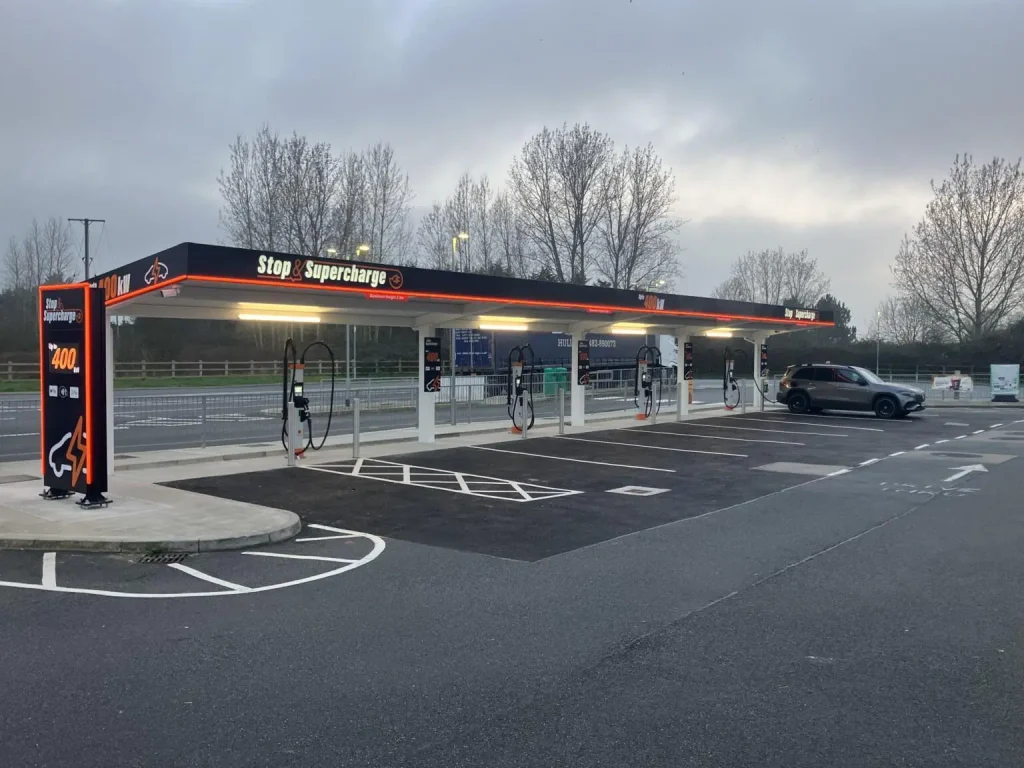
Article contents
The site was commissioned in February 2026, although Kempower announced the financing arrangement on 4 August. The installation uses four Kempower Double Satellites connected to two Power Units, while Yunex Traffic supplied the hardware installation and is providing long-term servicing.
Each connection can deliver up to 400 kW where sufficient system power is available and the connected vehicle can accept it. Because the Satellites are supplied from central Power Units, the installation should not be interpreted as eight separate chargers each with a permanently dedicated 400 kW supply.
Financing becomes part of the charging package
Kempower and DLL began their financing partnership in 2024, with the aim of reducing the upfront capital required to deploy DC charging infrastructure. Depending on the market and agreement, the wider partnership can offer structures including finance leasing and operating leasing.
For the Astwick project, Kempower describes the arrangement as a flexible finance agreement and confirms that regular maintenance is supplied alongside the charging hardware. The exact finance structure, lease duration and end-of-term arrangements have not been published.
That distinction matters. Lease-funded charging can make a project easier to start by spreading expenditure over time, but it does not remove the need to assess the total lifecycle cost and the obligations attached to the agreement.
Eight CCS2 connections with shared power
Astwick uses Kempower’s distributed charging architecture, where the Power Units provide centralised DC power to multiple Satellite dispensers. Kempower’s system can dynamically route available power between connected vehicles according to demand.
This means the 400 kW figure describes the maximum capability of an individual charging connection rather than a guarantee that 400 kW is simultaneously available at every bay. Actual charging power will depend on the installed Power Unit capacity, how many vehicles are connected, the allocation of available power and the charging capability of each vehicle.
Kempower has not stated the total installed DC capacity of the Astwick site in its announcement.
What operators need to establish in a lease-funded project
For independent forecourt operators, the attraction of this model is straightforward: high-power charging can require substantial upfront investment before utilisation and charging revenue have been established. Combining finance with equipment and maintenance can move some of that burden away from the initial purchase.
However, the commercial terms can become just as important as the charger specification. Before comparing a lease-funded proposal with direct ownership, operators need clarity on several points:
- who owns the charging equipment during the agreement and what happens to it at the end of the term;
- which preventative and corrective maintenance obligations are included;
- whether software, communications, payment services and backend costs form part of the package;
- whether the operator can change backend or service provider during the agreement;
- how upgrades, equipment replacement and technological obsolescence are treated; and
- how the total cost over the finance term compares with buying the infrastructure outright.
The Astwick announcement does not provide answers to all of these questions, and the terms may differ between projects. They are nevertheless important procurement considerations because financing can shift lifecycle risk between the site operator, equipment supplier, finance provider and service partner.
A possible route for independent forecourts
The project is a useful example of a wider change in EV charging procurement. Operators increasingly have options between purchasing equipment outright, leasing it, using fully funded CPO models or combining infrastructure with long-term service agreements.
For smaller forecourt businesses, access to finance could make high-power charging viable where the initial capital requirement would otherwise delay investment. The trade-off is that lower upfront expenditure can come with a longer commercial relationship and additional contractual dependencies.
For that reason, charger selection under a lease model should extend beyond headline power and hardware price. Ownership, maintenance responsibility, software flexibility, upgrade options and end-of-term conditions all form part of the effective specification of the charging system.
Related articles
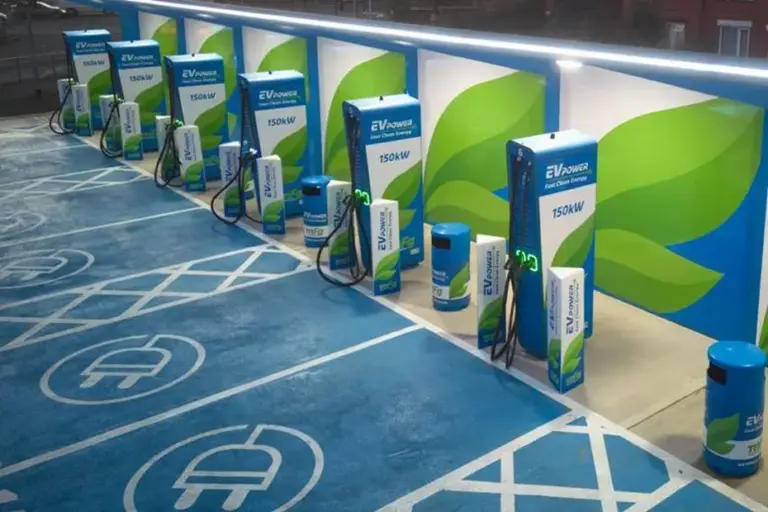
MFG opens eight-bay 150 kW charging hub at Kilmarnock
Motor Fuel Group has opened an eight-bay ultra-rapid EV charging hub at its Riccarton Road forecourt in Kilmarnock.
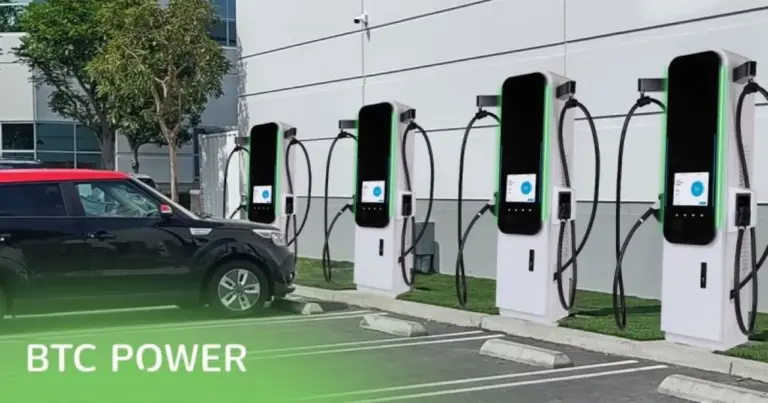
BTC POWER and Summit outline 17-site US charging pipeline
BTC POWER and Summit Charging have outlined a 17-site US charging pipeline covering 107 chargers and 135 charging ports, including projects that the companies…
UK rapid-charging tariff spread reaches roughly 39p-93p/kWh
UK rapid and ultra-rapid public charging prices now span roughly 39p/kWh to 93p/kWh across selected tariffs in Chargenet's 11 September comparison, illustrating how difficult…