 EVCP Info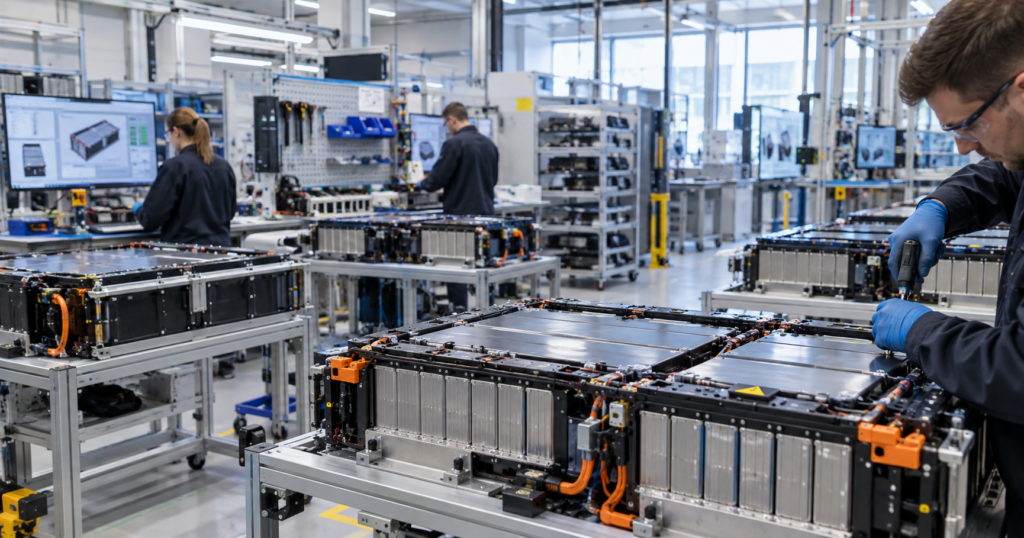
Article contents
The National Wealth Fund has invested £52.6 million, with Korea Development Bank and Honda Xcelerator Ventures also joining the round.
The funding will support a new UK pilot manufacturing facility, expansion of Nexeon’s advanced manufacturing technology unit, further research and development, and continued commercialisation work.
Why silicon is being added to battery anodes
Most lithium-ion batteries use graphite as the main anode material. Silicon can store substantially more lithium per unit mass than graphite, creating the potential for higher cell energy density.
That can allow a battery designer to increase energy within a similar pack size, or achieve the same usable energy with less active material. Nexeon markets two silicon-based materials, including products intended for silicon-graphite blends and higher-silicon anodes.
The main engineering problem is expansion. Silicon changes volume significantly as lithium moves into and out of the material during cycling. If that expansion is not controlled, it can damage the electrode and accelerate capacity loss.
Nexeon says its material structures are designed to contain that expansion and retain acceptable cycle life. Those performance claims ultimately depend on the finished cell design rather than the anode material in isolation.
Higher charge acceptance is possible, but not automatic
Nexeon and the National Wealth Fund both say the technology can contribute to shorter charging times as well as higher energy density.
There is a technical basis for silicon-rich anodes potentially improving fast-charge performance, but an anode material does not by itself determine an EV charging curve.
Fast charging still depends on the cathode, electrolyte, cell format, thermal management, pack voltage, battery-management strategy and the charger supplying the vehicle. Higher silicon content also introduces cycle-life and thermal challenges that have to be controlled at cell and pack level.
For charging infrastructure, the relevant chain is therefore battery charge acceptance -> vehicle charging curve -> peak and sustained charging power -> cable, cooling and site power requirements.
Nexeon already has automotive battery links
Nexeon has previously announced a long-term supply agreement with Panasonic Energy for silicon anode material intended for automotive lithium-ion cells. Panasonic said the material would be used in batteries produced at its Kansas facility.
Honda also became a strategic investor in Nexeon earlier in 2026 through Honda Xcelerator Ventures.
The latest £100 million round therefore supports a company that is already moving beyond laboratory development into manufacturing and automotive supply relationships.
Commercial scale-up remains the important next step
Nexeon has commissioned a volume-production facility for silicon-carbon material in Gunsan, South Korea, while the new National Wealth Fund investment will add pilot manufacturing capability in the UK.
The immediate significance for EV charging is not that vehicles will suddenly charge faster. It is that battery materials capable of supporting higher energy density and potentially higher charge rates are moving closer to commercial scale.
If those capabilities translate into production vehicles, charger and site design will eventually have to respond to the charging curves that result.
Related articles
Mercedes-Benz UK appoints Pod as sole home-charging partner
Mercedes-Benz UK has appointed Pod as its sole home EV charging partner, extending an existing relationship between the two companies.
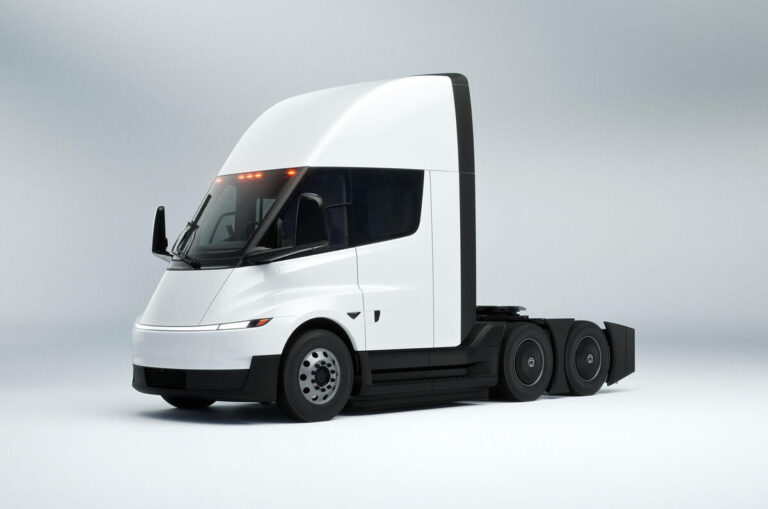
Tesla reveals European Semi with 800 kW charging and MCS 3.2
Tesla has published the first detailed European specification set for the Semi, listing approximately 550 km of range at a 40-tonne gross combination weight…
Jolt Capital and Tesi acquire VEV from Vitol
Commercial fleet-electrification company VEV has moved into new ownership, with Jolt Capital and Finnish state-owned investor Tesi acquiring the business from Vitol alongside VEV…