 EVCP Info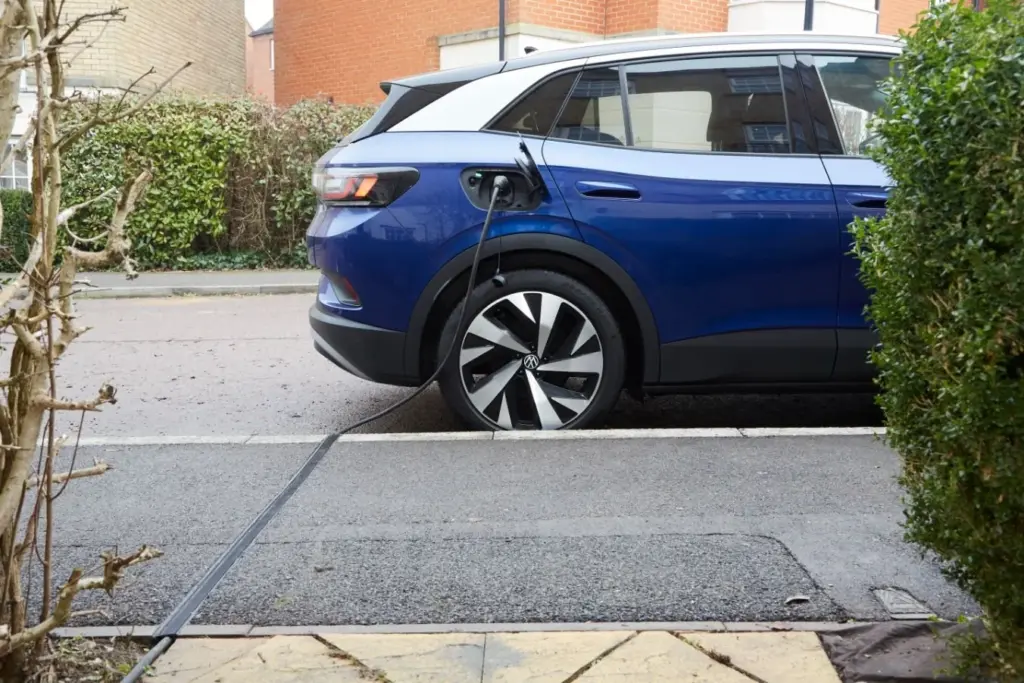
Article contents
The trial would allow eligible residents without off-street parking to use an embedded cable channel between their property and a legally parked vehicle. The council is currently inviting residents to register their interest, but the scheme has not yet received final approval.
Eligibility is more restrictive than simply having no driveway
The proposed framework sets out a long list of site conditions. The channel must be installed in a hard-surfaced footway, cannot cross a grass verge or planted area, cannot be immediately adjacent to a dropped kerb and must avoid trees and tree roots.
The property must have access to a private electricity supply at ground-floor level, and the proposed channel must not be within 2.5 metres of electrical equipment on the footway such as an EV charge point, streetlight column or telecoms cabinet.
The council also excludes locations at street corners, junctions or significant access points and requires suitable legal kerbside parking reasonably close to the property.
The 2.5 metre rule appears to be Warrington-specific
National Department for Transport guidance does not set a fixed 2.5 metre separation distance for cross-pavement channels. It instead says local authorities should consider the proximity of charging vehicles to separately earthed equipment, including lamp posts and other charging equipment, as part of electrical safety and site suitability checks.
Warrington’s 2.5 metre requirement therefore appears to be a local eligibility rule within the proposed trial rather than a general national standard.
A channel does not reserve a parking space
The council makes clear that installing a cross-pavement channel would not reserve the parking space outside a resident’s property. On-street parking remains available to other motorists unless separate restrictions apply.
That has a direct effect on charger selection and cable reach. A vehicle may not always be able to park immediately outside the property, so the charger and cable arrangement still needs to be practical without leaving excess cable across the footway or carriageway.
Leased chargers add another condition
Warrington also tells residents using a charger supplied through a lease, salary-sacrifice or company-car arrangement to check that the proposed cross-pavement solution does not breach the charger lease or warranty conditions.
That is an important factor. A property may meet the council’s highway requirements while the contractual terms attached to the charging equipment still restrict how the charger or cable can be used.
Trailing cables and cable mats are not permitted
The council says residents must not trail a charging cable across the pavement without an approved channel. Cable mats or similar temporary covers are also not accepted as an alternative under the proposed policy.
The trial is still subject to Cabinet consideration in October. Until then, Warrington has published a proposed framework rather than creating a borough-wide right to install charging gullies.
Related articles
Moray approves £923 cross-pavement EV charging policy
Moray Council in Scotland has approved a policy allowing eligible residents without off-street parking to install cross-pavement EV charging infrastructure beneath the public footway.
Tameside approves £600 cross-pavement EV charging trial as live guidance lags
Tameside Council has approved a cross-pavement EV charging policy for residents without off-street parking, with an initial trial of approximately 150 installations expected to…

Somerset resets £3.78m LEVI rollout after charging market changes
Somerset Council is preparing to restart procurement for its £3.78 million Local Electric Vehicle Infrastructure (LEVI) programme after reviewing the original delivery model following…