 EVCP Info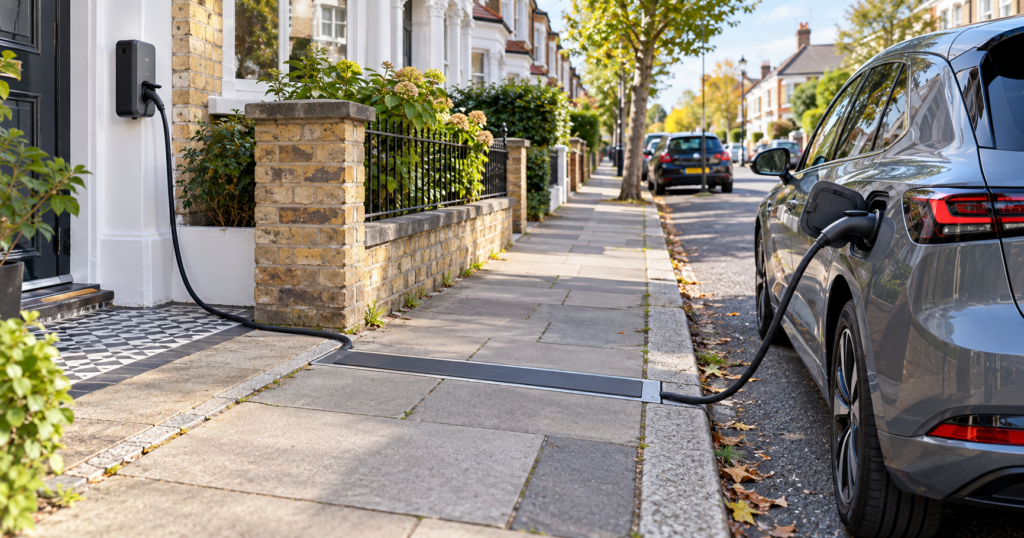
Article contents
Successful applicants are expected to pay a one-off £600 fee, covering council maintenance of the cross-pavement channel for ten years. The council will install, own and maintain the channel, while residents will arrange and pay for their own home chargepoint, cable and any necessary electrical work or permissions.
The council’s Executive Cabinet approved the Cross-Pavement Solutions policy on 26 August 2026. The decision was published on 28 August and, with no call-in recorded by the deadline, was due to take effect on 9 September. Tameside also issued an official press release confirming the approved policy, the approximate 150-installation trial and the £600 resident contribution.
What the approved scheme does – and does not – provide
The channel is intended to contain a domestic charging cable within the footway so eligible residents without a driveway can access home charging without trailing an exposed cable across the pavement. Applications will still be subject to eligibility and site-suitability checks.
Installation of a channel will not reserve the parking space outside a property. A resident could therefore have an approved channel and home chargepoint but still be unable to park adjacent to it when they need to charge.
The council has also authorised acceptance of an anticipated £158,695 Transport for Greater Manchester EV pavement-channels grant and approved procurement and delivery of channels up to the value of the available funding. The final number delivered remains dependent on costs, demand, site suitability, operational capacity and grant conditions.
Cross-pavement charging moves from policy debate to controlled delivery
The Tameside model illustrates a recurring issue for local authorities: home charging can be cheaper and more convenient than relying entirely on public charging, but residents without off-street parking need a safe and legally controlled way to cross the public highway.
The council-owned approach keeps the physical highway asset under local authority control while leaving the resident responsible for the private EVSE and electrical installation. That separation also makes it important for public guidance to remain current, because residents need a clear distinction between an approved council channel and privately installed or improvised cable-routing solutions that remain prohibited.
Related articles
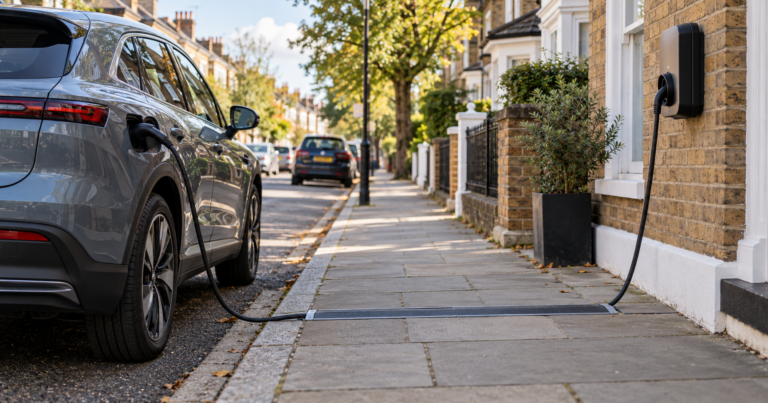
Moray approves £923 cross-pavement EV charging policy
Moray Council in Scotland has approved a policy allowing eligible residents without off-street parking to install cross-pavement EV charging infrastructure beneath the public footway.
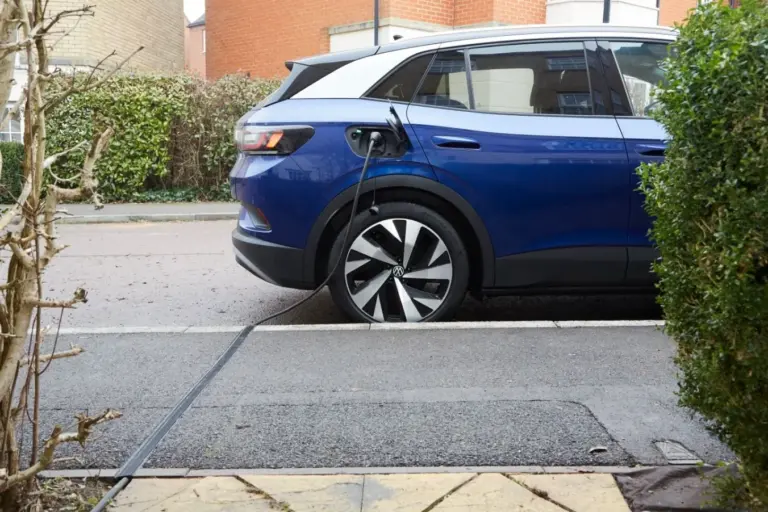
Warrington sets out cross-pavement EV charging rules ahead of trial
Warrington Borough Council has published detailed eligibility and safety requirements for a proposed cross-pavement EV charging trial, ahead of a Cabinet decision expected in…

Electreon introduces 11 kW above-ground wireless EV charger
Electreon has introduced Lite DOT, an above-ground stationary wireless charging system for electric passenger cars and light commercial vehicles, at IAA Transportation 2026 in…