 EVCP Info
Article contents
The development is around one mile from Junction 35 of the M1 and is scheduled to open in spring 2027. Unlike a passenger-car charging site adapted for larger vehicles, Aegis says the hub has been designed around vans and trucks from the outset.
The site is designed around commercial-vehicle dwell
Aegis currently lists 72 van bays and 30 truck bays, CCS2 charging at up to 400 kW, HVO refuelling, pre-booking, drive-up access and overnight parking. Driver facilities are planned to include showers, toilets, a lounge and food provision.
Those figures should not be read as 102 simultaneous charging connectors. Aegis describes the numbers as van and truck bays and does not currently publish the final number of charging outlets, the site’s grid connection capacity or the power-sharing design. Those numbers will determine actual charging throughput.
Commercial charging has different geometry from car HPC
A passenger-car HPC site is usually designed around short vehicles, relatively compact bays and a retail or motorway dwell. A commercial hub must accommodate rigid trucks, articulated combinations, trailer swing, turning radii, longer dwell periods and drivers taking statutory breaks or overnight rest.
The electrical demand is also different. A single 400 kW truck session is manageable at many high-power sites; several trucks charging together can move the site into a multi-megawatt operating range. Thirty truck bays therefore say more about the physical scale and future ambition of the hub than they do about its instantaneous electrical capability.
Sheffield will be an important reference site
Aegis says the hub will support booked as well as drive-up use, giving fleets the possibility of coordinating charging with route plans and driver breaks. It also gives the company an operating site on which higher-power truck charging can be expanded as the vehicle market develops.
The most useful next disclosures will be the number of active CCS connectors, total MW connection, charger manufacturer, power-sharing architecture and whether the electrical and civil design includes a defined route to MCS. Booking rules, fleet contracts, overnight parking tariffs and maintenance arrangements will also determine whether the hub works as commercial fleet infrastructure rather than simply a large charging site.
Related articles
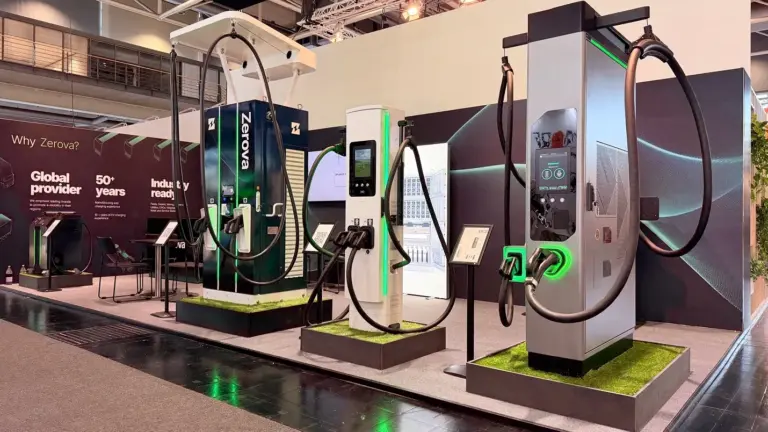
Zerova brings 1.44 MW MCS dispenser to Europe
Zerova has introduced its megawatt-class MCS fleet satellite dispenser to the European market at IAA Transportation 2026 in Hanover, specifying up to 1,440 kW…

Electreon introduces 11 kW above-ground wireless EV charger
Electreon has introduced Lite DOT, an above-ground stationary wireless charging system for electric passenger cars and light commercial vehicles, at IAA Transportation 2026 in…
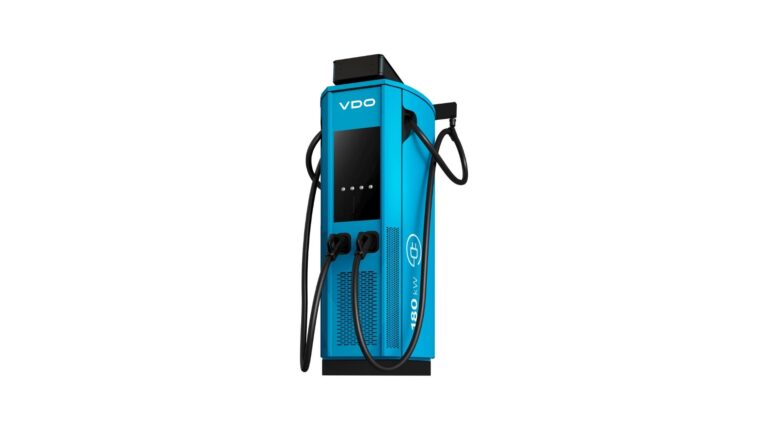
AUMOVIO enters charging hardware market with VDO fleet range
AUMOVIO has expanded its commercial-vehicle electrification portfolio into EV charging infrastructure, introducing VDO-branded charging solutions at IAA Transportation.