 EVCP Info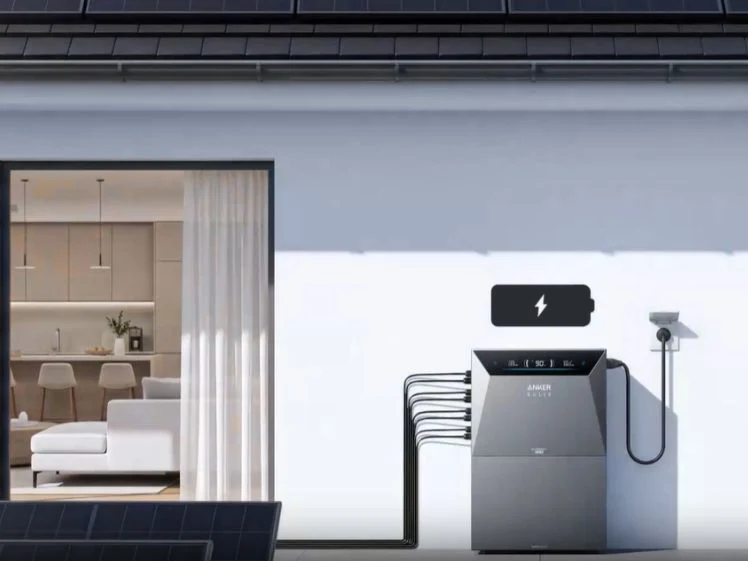
Article contents
The distinction matters for EV charging because home batteries, solar inverters and charger CT-based load management can all interact with the same household import and export measurements.
The Solarbank 4 Pro is being marketed in the UK
Current UK product reporting describes the Solarbank 4 Pro with a 5 kWh base battery, expansion options, up to 5 kW of solar input and higher-power configurations capable of up to 2.5 kW AC output.
Those specifications should not be read as evidence that every configuration can simply be connected through a standard plug under the new Great Britain plug-in solar rules.
Plug-in solar and plug-in batteries are not the same regulatory case
The new framework legalises compliant plug-in solar generation within defined limits and equipment requirements. Higher-power battery systems can present different connection, protection and export-control issues.
A system that can charge from the grid, discharge into the home and interact with solar is not technically equivalent to a small generation-only microinverter. Connection method and ENA type-test status therefore need to be for the exact UK product and configuration.
EV charger load management can be affected
Many EV chargers use a current transformer at the incoming supply to estimate household demand and dynamically reduce charging power before the service limit is exceeded.
Solar generation and battery discharge can reduce measured grid import even while large loads are operating inside the property. Depending on the charger and control strategy, that can create situations where net-import measurement does not represent the true internal load on individual conductors or circuits.
Related articles

First Bus expands smart charging from 34 to 172 outlets at Glasgow depot
First Bus has expanded Optimo Energy's charging-management system from 34 to all 172 charging outlets at its Caledonia depot in Glasgow following an initial…
SP Energy Networks expands battery-buffered fleet charging to three sites
SP Energy Networks has expanded TUAL's PowerUp battery-buffered DC charging system across three operational sites following an initial trial at Middlewich in Cheshire.
Plug-in solar becomes legal in Great Britain
Compliant plug-in solar devices can now legally be bought and used across Great Britain after the new regulatory framework came into force on 27…