 EVCP Info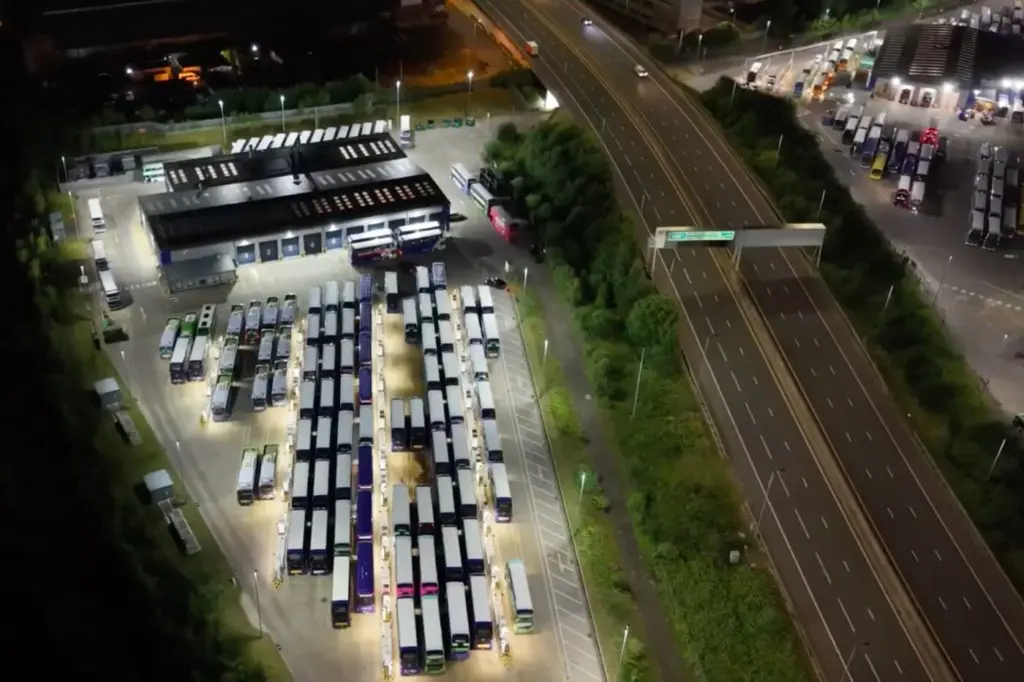
Article contents
The scale matters because Caledonia has a potential 12 MW charging load operating behind a 5 MW grid connection. Optimo’s platform forecasts vehicle energy requirements and dynamically schedules charging against fleet needs, energy prices and grid conditions rather than allowing every connected vehicle to draw power independently.
Bus readiness is the first constraint on flexibility
First Bus says vehicle readiness remains the overriding priority. Only after the system has secured the energy required for buses to meet their operating schedules can the remaining flexibility in charging demand be used to respond to wholesale prices or electricity-system requirements.
At 172 outlets, that creates a multi-variable optimisation problem. The system has to account for vehicle departure times, required state of charge, available chargers, site power limits and electricity-market signals at the same time. A theoretically valuable flexibility event cannot be accepted if it would leave a bus short of energy for its next duty.
Caledonia is participating in the Balancing Mechanism
Earlier in 2026, First Bus became the first UK bus operator to enrol an electric depot in the Balancing Mechanism. The operator describes using charging flexibility to increase demand when there is excess renewable generation and reduce demand at constrained or expensive periods, while also accessing flexibility-market revenues.
First Bus’s September release also uses the phrase ‘sell surplus energy back into the grid’. The technical mechanism described in its own earlier Balancing Mechanism announcement is demand-side flexibility: changing when the buses charge. It does not describe vehicle-to-grid export from bus batteries, so the project should not be presented as a 172-outlet V2G deployment.
A concentrated fleet load behaves differently from distributed aggregation
The Caledonia project provides a useful contrast with flexibility platforms that aggregate thousands of home or public chargers. Here, the flexible load is concentrated behind one depot connection and tied to a tightly scheduled transport operation.
That concentration creates both constraint and opportunity. A 5 MW connection cannot support the depot’s full 12 MW nominal charging load simultaneously, making managed charging essential. But once operational energy requirements are protected, a large controllable load at one site can also respond meaningfully to electricity prices and system signals without installing additional charging hardware.
The expansion from 34 to 172 outlets is less about adding chargers than extending an energy-management layer across an existing fleet-charging estate. It shows how CPMS-style charger control is increasingly being combined with fleet scheduling and electricity-market participation at large depots.
Related articles
SP Energy Networks expands battery-buffered fleet charging to three sites
SP Energy Networks has expanded TUAL's PowerUp battery-buffered DC charging system across three operational sites following an initial trial at Middlewich in Cheshire.

Anker Solarbank 4 Pro reaches UK as plug-in solar rules change
Anker SOLIX has begun UK sales activity for the Solarbank 4 Pro as Great Britain's new plug-in solar framework comes into force, bringing renewed…

Paua and Zaptec combine home, workplace, depot and public fleet charging
Paua and Zaptec have formed a UK partnership intended to bring home, workplace, depot and public EV charging into one fleet-management and payment environment.