 EVCP Info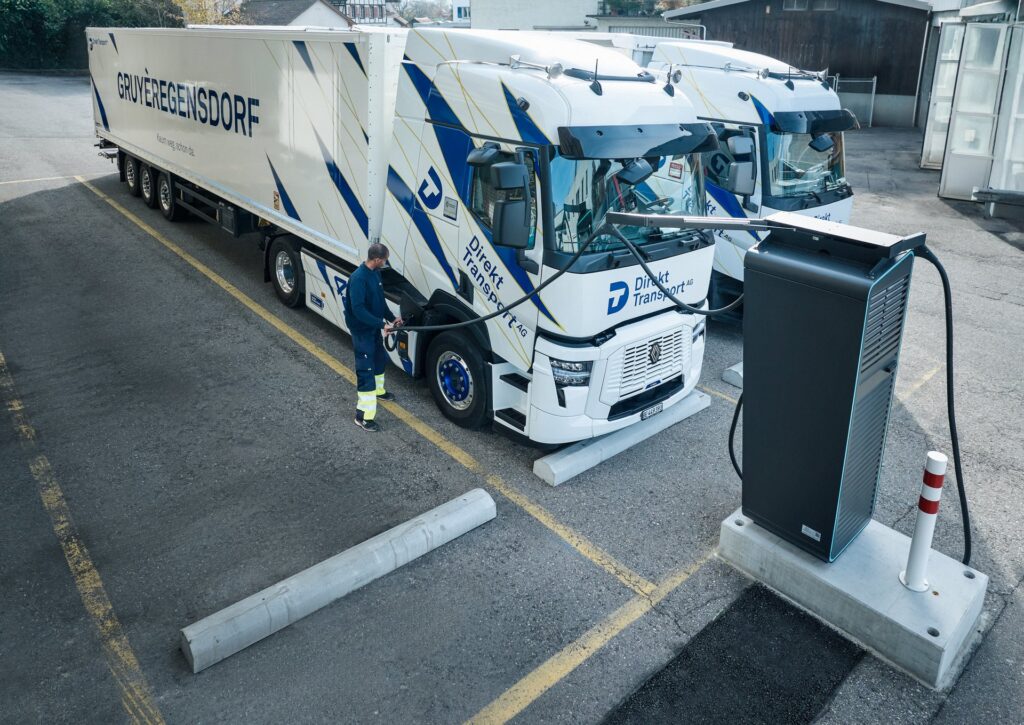
Article contents
The platform currently brings together around 126 charging points across 40 sites, with a wider commercial rollout planned from 10 November 2026.
The model shares existing depot charging capacity
ASTAG Charge is designed around charging infrastructure that transport companies have already installed at depots, customer sites or partner locations.
Site operators can open unused charging capacity to other participating fleets while retaining control over who can charge, when access is available and the price charged.
That creates a middle ground between a completely private depot and an open public truck-charging hub.
OCPP support reduces hardware dependence
ASTAG Charge says the platform is manufacturer-independent and can work with standard OCPP-compatible charging stations.
Fleet operators use RFID access and receive consolidated monthly billing. The platform also supports finding and booking available charging points, while a new driver app shows charger availability and site-access information.
Shared capacity could reduce the need to duplicate infrastructure
Truck depots often install charging around their own vehicle schedules, which can leave capacity unused at other times. Sharing that capacity gives participating operators another charging option without each company having to build enough infrastructure for every possible journey away from its own base.
The model still depends on practical factors such as vehicle access, charger power, availability windows and whether a site can accommodate an articulated vehicle.
ASTAG Charge remains in its rollout phase, but the growth to 64 participating companies provides a useful test of whether shared private infrastructure can complement dedicated public HGV charging networks.
Related articles
Zerova brings 1.44 MW MCS dispenser to Europe
Zerova has introduced its megawatt-class MCS fleet satellite dispenser to the European market at IAA Transportation 2026 in Hanover, specifying up to 1,440 kW…
First Bus expands smart charging from 34 to 172 outlets at Glasgow depot
First Bus has expanded Optimo Energy's charging-management system from 34 to all 172 charging outlets at its Caledonia depot in Glasgow following an initial…
Paua and Zaptec combine home, workplace, depot and public fleet charging
Paua and Zaptec have formed a UK partnership intended to bring home, workplace, depot and public EV charging into one fleet-management and payment environment.