 EVCP Info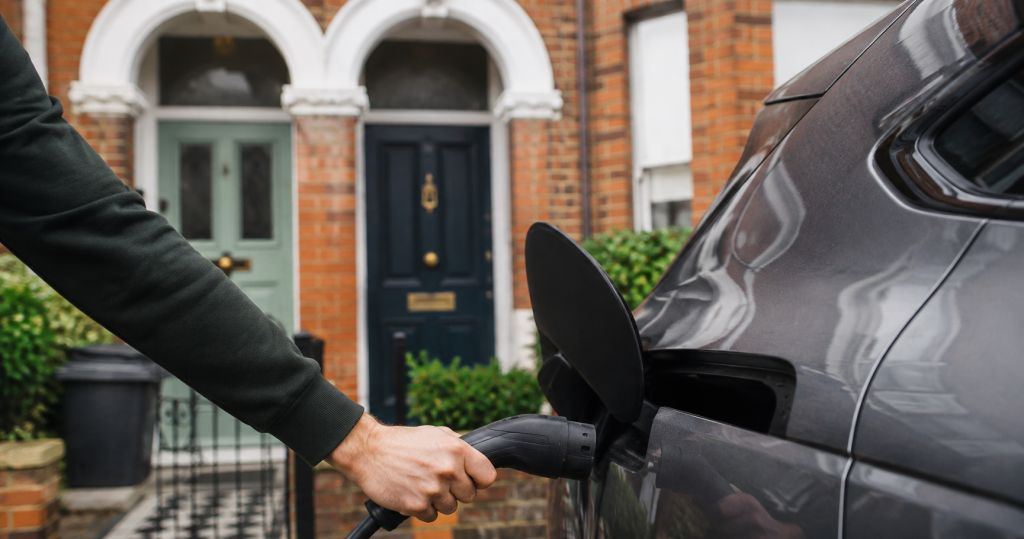
Article contents
BEAMA modelled the impact of reducing the 2030 zero-emission car target from the current 80% trajectory to 50%, one of the options now being considered in the government’s formal ZEV mandate review.
BEAMA models 1.7 million fewer home charger sales
Under the weaker trajectory, BEAMA estimates that up to 1.7 million fewer home chargepoints could be sold by 2034 compared with the existing mandate. It values the deferred charger sales and installations at around £1.56 billion.
The figures are industry modelling rather than a government forecast. BEAMA represents companies across the electrical and EV charging sectors, so the estimates should be read as the trade body’s assessment of how lower vehicle targets could affect its market.
The impact extends beyond charger sales
BEAMA also estimates that the same scenario could leave the electricity system with up to 12 GW less flexible EV charging capacity by 2034.
That would affect the pool of controllable charging load available for smart charging and other flexibility services, as well as the number of domestic installations available to participate.
The 12 GW figure should not be compared directly with the government’s 2030 consumer-led flexibility target. The Clean Flexibility Roadmap sets a 10-12 GW total consumer-led flexibility range for 2030 and separately identifies smart charging within that wider mix. BEAMA’s estimate uses a different scenario and a later 2034 horizon.
The ZEV review creates uncertainty beyond vehicle manufacturers
The government’s consultation, opened on 14 August, is considering several alternative annual ZEV trajectories while retaining the requirement for all new cars and vans to be zero emission by 2035.
For the charging sector, the pace of BEV adoption affects more than future public-network utilisation. It also shapes domestic charger demand, installer workload, manufacturing volumes and the amount of EV load available for managed charging.
BEAMA’s figures therefore provide a useful measure of how vehicle policy can flow through into the charging and electricity markets, even though the eventual impact will depend on which policy pathway is chosen and how consumers respond.
Related articles
EVA England launches UK-wide driver survey on EV charging and policy
EVA England has launched its annual UK-wide driver survey, asking electric, hybrid, petrol and diesel drivers to share their views on charging, vehicle affordability,…
Ireland publishes first detailed public EV charging dataset
Ireland's Central Statistics Office has published its first detailed national dataset on public EV charging infrastructure, reporting 1,125 charging locations and 3,416 public charging…
UK reaches 121,171 public EV chargers as rapid network grows faster
Department for Transport figures show the UK had 121,171 publicly available EV chargers, measured as EVSE, on 1 July 2026. Of these, 28,887 were…