 EVCP Info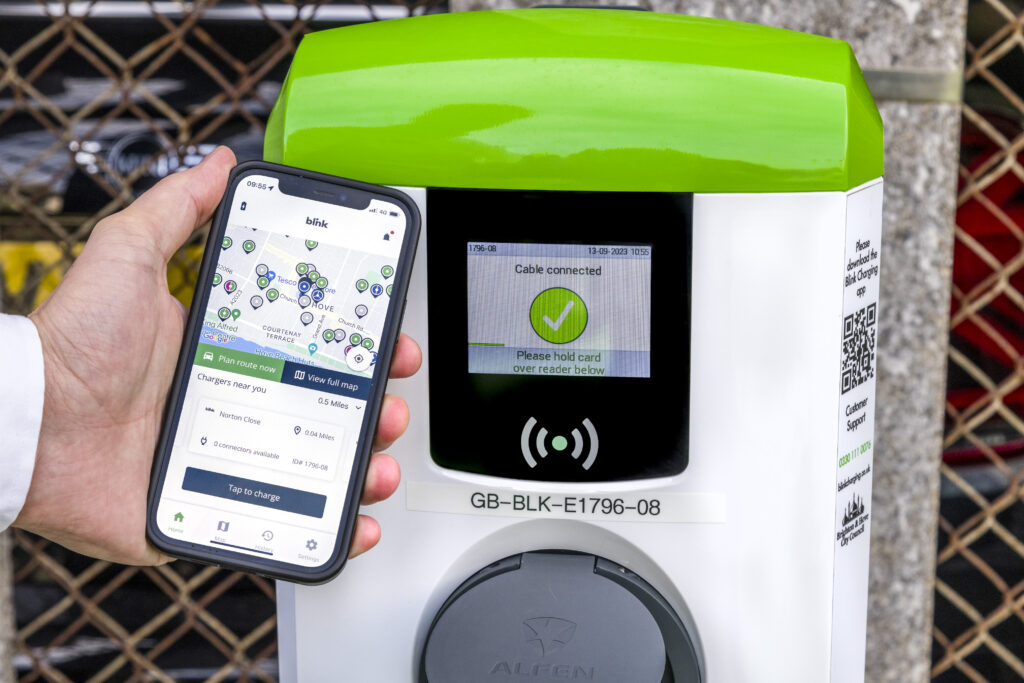
Article contents
The first deployment covers 13 Blink-owned DC fast-charging sites in Florida. A phased rollout is planned across further Blink locations in the US, UK and Belgium.
Why site-level control matters
At a multi-charger site, the total rating of the chargers can be much higher than the power available from the grid connection. If several vehicles plug in at once, the site therefore needs to decide how its available capacity is shared. EnergyConnect is designed to manage that process across the whole location rather than treating each charger separately.
The platform provides live energy monitoring, dynamic load balancing, charger grouping and site-level power limits. Operators can also schedule different limits by day or time, which may help them keep charging within an agreed connection capacity or avoid adding load during expensive periods.
Load management does not create additional grid capacity. It can make better use of an existing connection where demand varies, but it cannot maintain every charger at full power if sustained demand is greater than the site can supply. Drivers may therefore see charging speeds reduce when a busy site is sharing power.
Wider rollout is planned
Blink says later versions of EnergyConnect will add utility integration and demand-response functions, as well as management of battery storage and on-site solar. That would allow a charging site to coordinate more of its energy equipment through one system.
The company also says EnergyConnect could lower electricity costs and reduce the need for some infrastructure upgrades. Those benefits are currently company expectations: the Florida deployment is the first test of how much the platform can deliver across operating sites before the planned expansion into the UK and Belgium.
Related articles
SP Energy Networks expands battery-buffered fleet charging to three sites
SP Energy Networks has expanded TUAL's PowerUp battery-buffered DC charging system across three operational sites following an initial trial at Middlewich in Cheshire.
First Bus expands smart charging from 34 to 172 outlets at Glasgow depot
First Bus has expanded Optimo Energy's charging-management system from 34 to all 172 charging outlets at its Caledonia depot in Glasgow following an initial…
European battery-storage installations forecast to rise 78% to 57 GWh in 2026
European battery-storage installations are forecast to reach approximately 57 GWh in 2026, up from 32 GWh in 2025, according to EUPD Research's latest Electrical…