 EVCP Info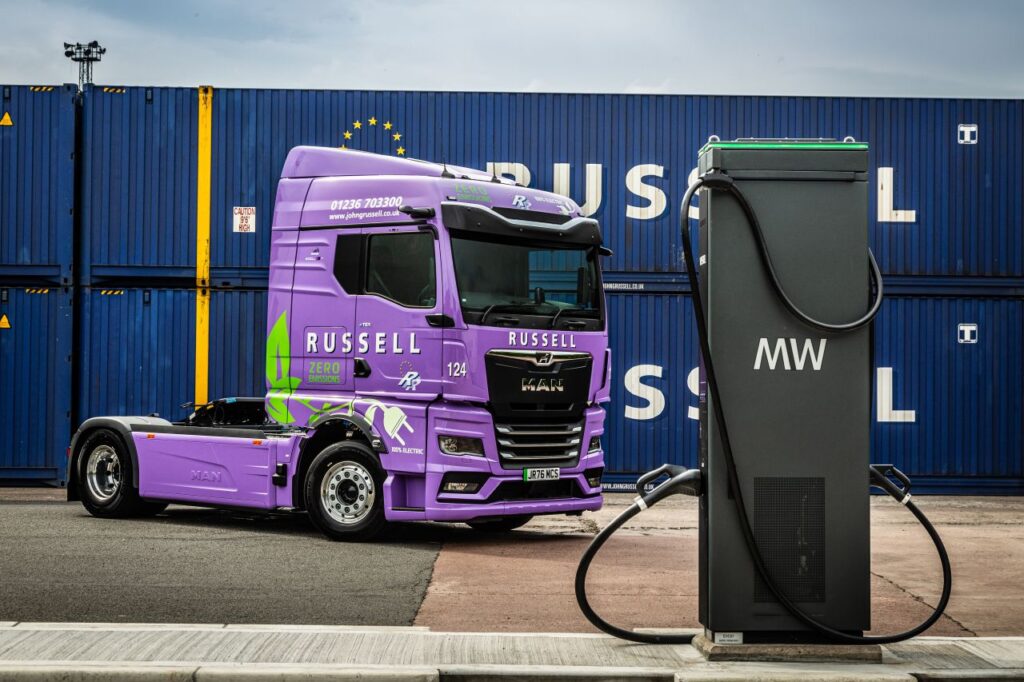
Article contents
The vehicle used was an eTGX 20.544 4×2 tractor with six 80 kWh battery packs, giving 480 kWh of installed battery capacity. It has an MCS inlet on the kerbside, a separate CCS inlet on the driver’s side and a 400 kW traction motor.
A 30-minute charging claim shows the scale of the load
Russell says the MCS-equipped truck can charge from 20% to 90% in around 30 minutes, allowing the session to fit within a statutory 45-minute driver break. That is an operator and manufacturer claim from the demonstration, not an independently verified charging curve.
The energy arithmetic nevertheless illustrates the electrical scale. Seventy per cent of a nominal 480 kWh pack is 336 kWh. If that amount of battery energy were added in 30 minutes, the average battery-side rate would be about 672 kW before considering usable-capacity limits, charging taper and conversion losses. That calculation should therefore be treated as an order-of-magnitude indicator rather than a measured result from the event.
Production MCS trucks are moving into UK fleet operation
MAN says production of MCS-compatible eTGX and eTGS models began in the second quarter of 2026. Russell currently operates four MAN electric trucks and expects that number to rise to 14 in early 2027.
The vehicles and infrastructure sit within the Department for Transport-funded Zero Emission HGV and Infrastructure Demonstrator programme, delivered with Innovate UK. The programme is moving into a five-year demonstration period in which operational data from vehicles and infrastructure will be collected to inform future commercial investment decisions.
MCS turns depot charging into a multi-megawatt design problem
The more important point for charging infrastructure is what happens when one successful demonstration becomes a fleet schedule. A single truck can require hundreds of kilowatt-hours in a narrow turnaround window. Multiple trucks returning together can therefore create a multi-megawatt site requirement even when each vehicle only needs one short charging session.
That changes the design problem from selecting a charger to coordinating the whole electrical system: grid connection capacity, transformer and switchgear sizing, simultaneous charging, dynamic power sharing, cooling, cable routing, vehicle scheduling and potentially battery storage all become material.
Russell’s deployment is useful precisely because the MCS equipment is attached to a real UK haulage operation rather than a test stand. The next useful evidence will be sustained charging curves, simultaneous-use behaviour, availability data and the effect of charging schedules on the depot’s actual maximum demand.
Related articles
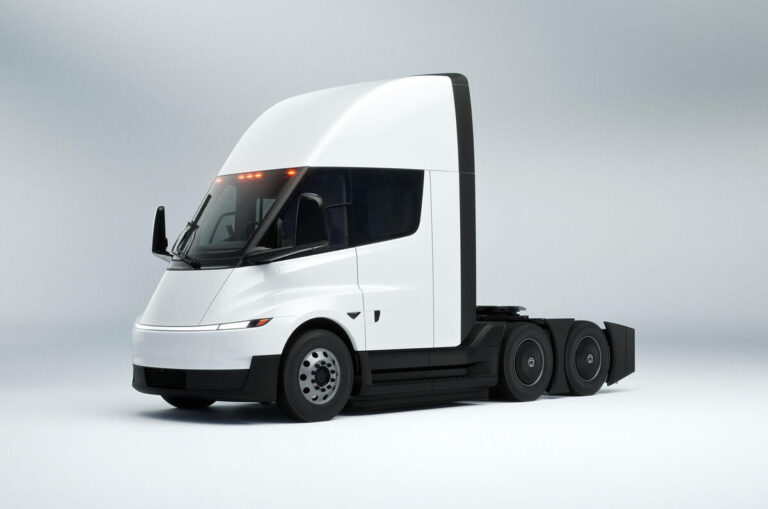
Tesla reveals European Semi with 800 kW charging and MCS 3.2
Tesla has published the first detailed European specification set for the Semi, listing approximately 550 km of range at a 40-tonne gross combination weight…
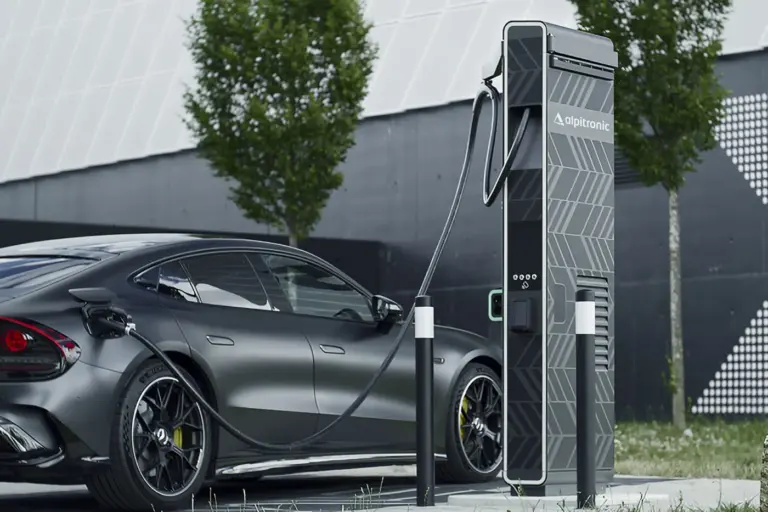
Alpitronic demonstrates 1 MW HYC1000 as AMG draws over 600 kW
Alpitronic has publicly demonstrated its HYC1000 distributed DC charging system at the intercharge network conference in Berlin, with a new Mercedes-AMG GT 4-Door Coupe…

Revoy puts battery swapping between the tractor and trailer for US heavy-duty fleets
US company Revoy is developing a different approach to heavy-duty vehicle electrification: rather than replacing a diesel tractor with a battery-electric truck, it inserts…