 EVCP Info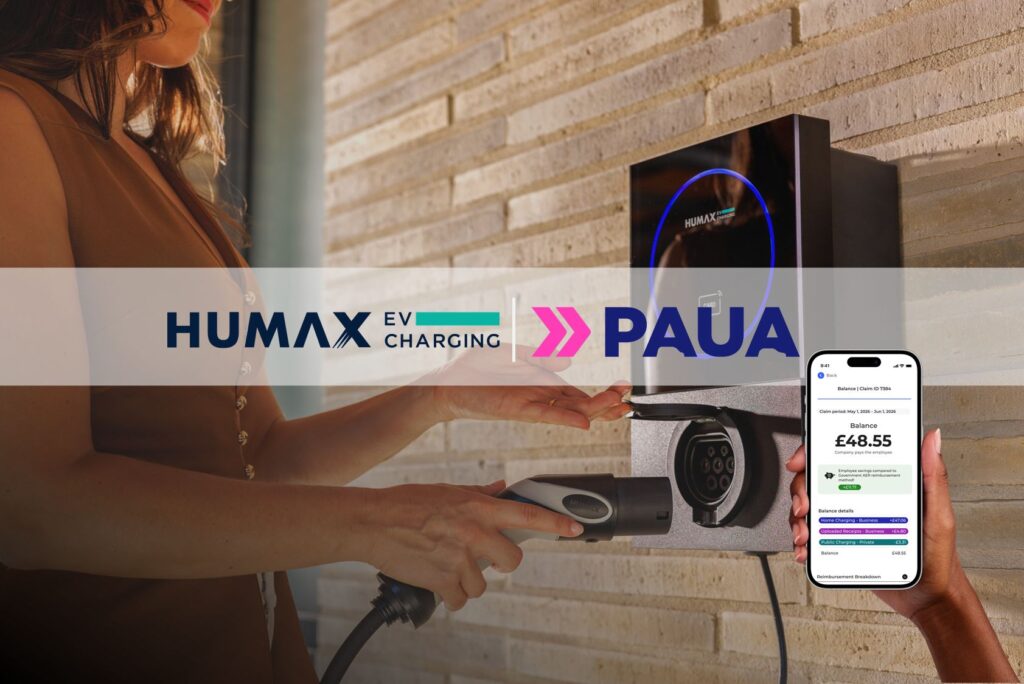
Article contents
The partnership was announced on 13 August, with further industry coverage appearing on 20 August.
Vehicle identification supports automated reimbursement
The MX7 uses ISO 15118-based vehicle identification to recognise compatible company vehicles when they are connected. Charging-session data can then be passed into Paua’s platform so the driver can be reimbursed for the energy used by the company vehicle without submitting a manual expense claim.
The approach is intended to reduce the risk of reimbursing charging for a personal vehicle at the same property and give fleet managers a clearer record of home charging activity.
One platform across several charging environments
Paua already combines public charging access with home reimbursement and fleet charging management. The Humax integration extends that model into charger-level vehicle identification at home.
Humax lists ISO 15118 and OCPP support for the MX7 and describes the charger as V2G-ready. The company also plans to add a 22 kW AC product for workplace and depot applications later in 2026.
For fleets, the practical value is less about another hardware partnership and more about connecting charging data across home, workplace, public and depot locations without relying on separate reimbursement processes.
Related articles
Paua and Zaptec combine home, workplace, depot and public fleet charging
Paua and Zaptec have formed a UK partnership intended to bring home, workplace, depot and public EV charging into one fleet-management and payment environment.
AUMOVIO enters charging hardware market with VDO fleet range
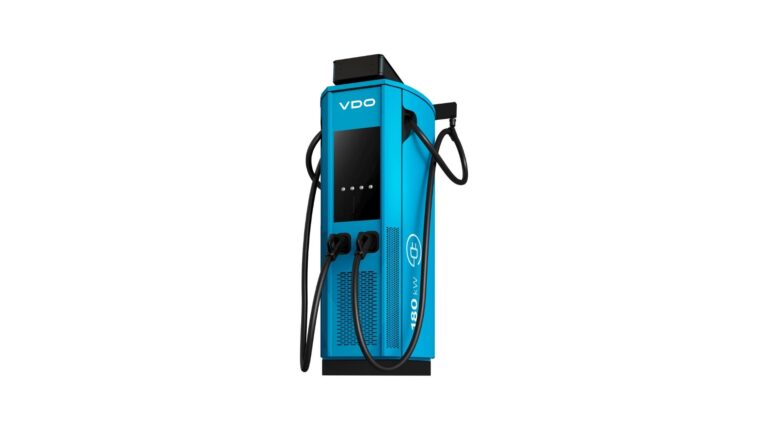
AUMOVIO has expanded its commercial-vehicle electrification portfolio into EV charging infrastructure, introducing VDO-branded charging solutions at IAA Transportation.
InstaVolt joins Shell Card network with 4,250+ UK chargers
InstaVolt has joined the Shell Card charging proposition, giving Shell Card fleet and business customers access to more than 4,250 InstaVolt chargers across over…